
Last updated November 16, 2026
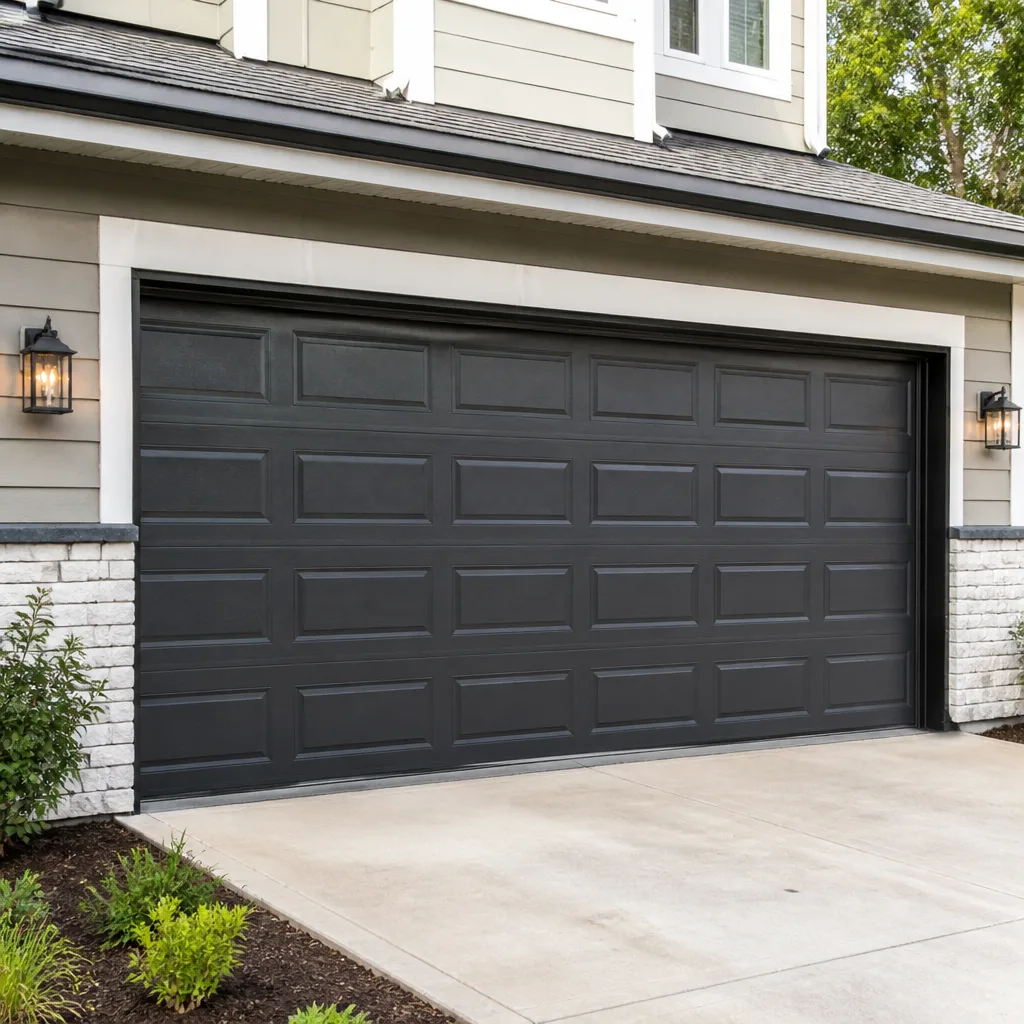 Raised-panel steel
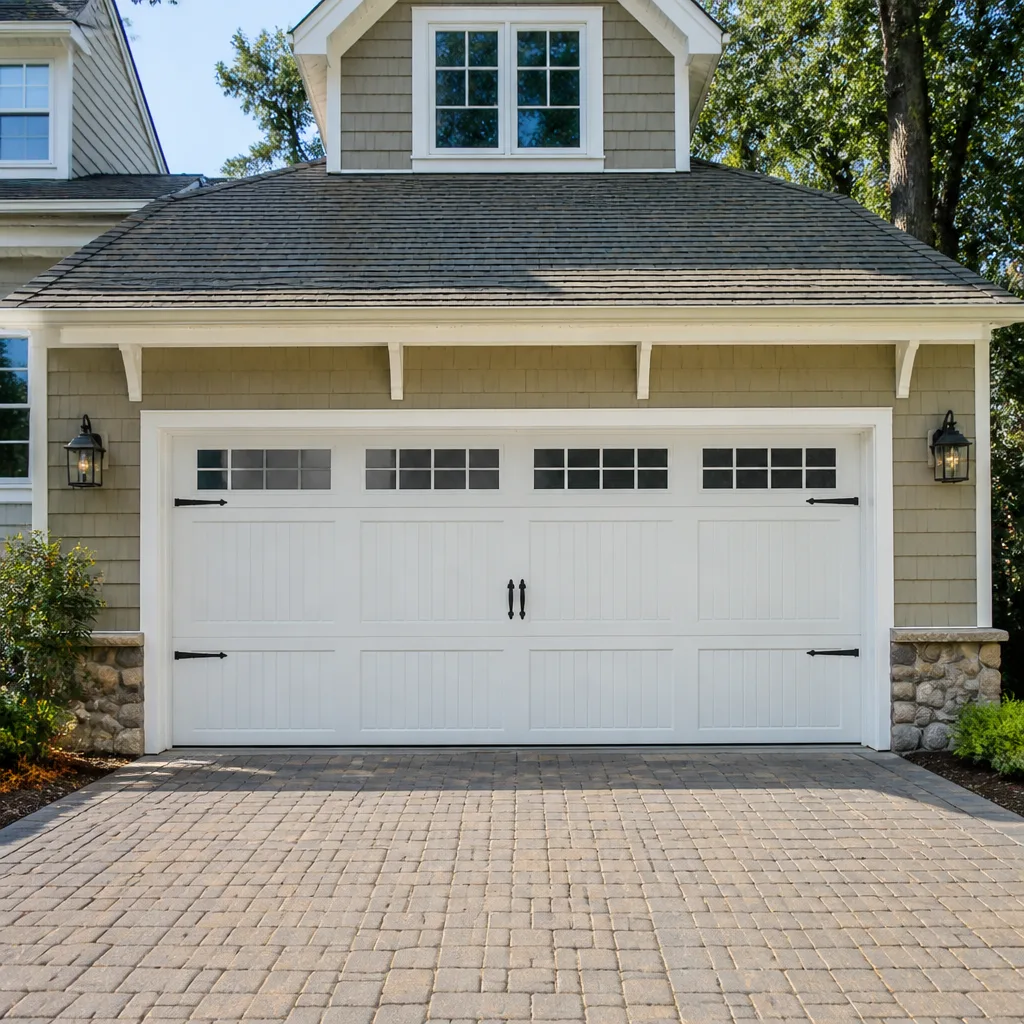 Carriage house
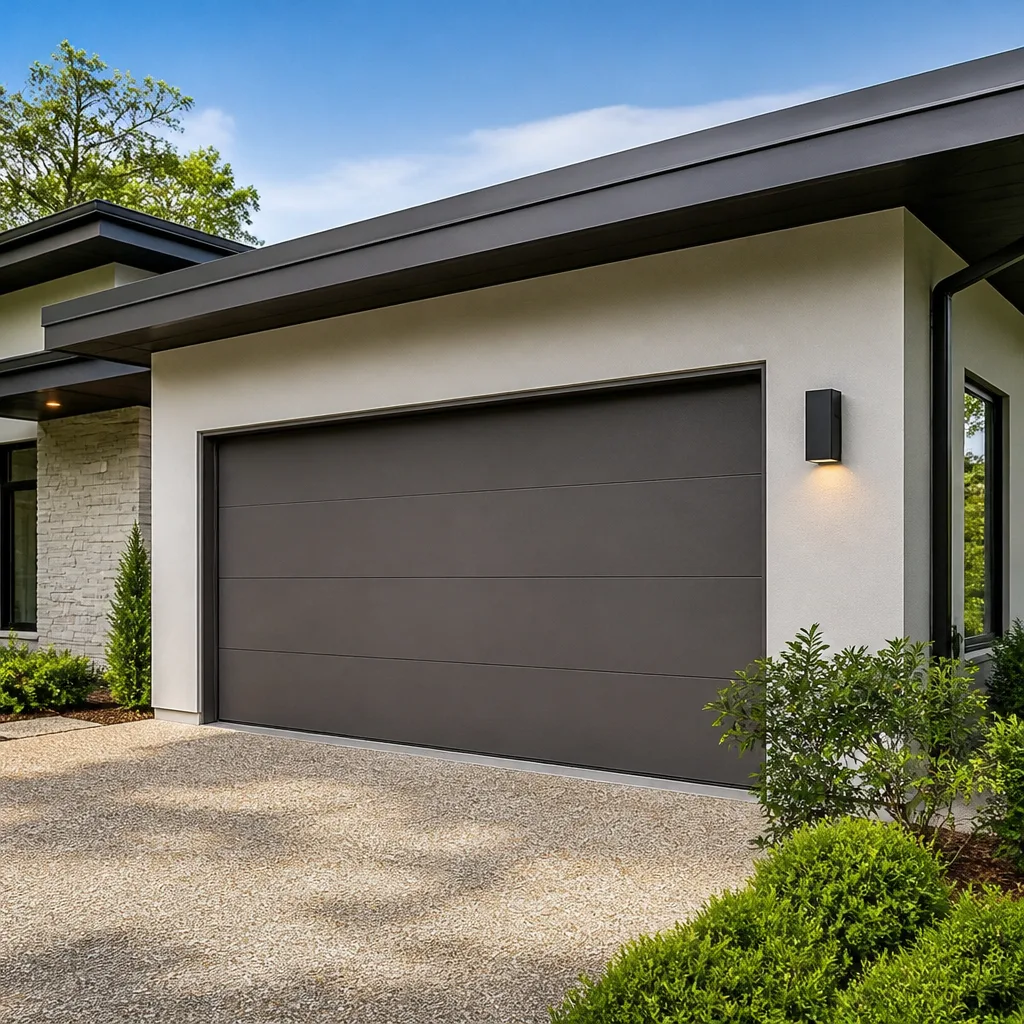 Modern flush
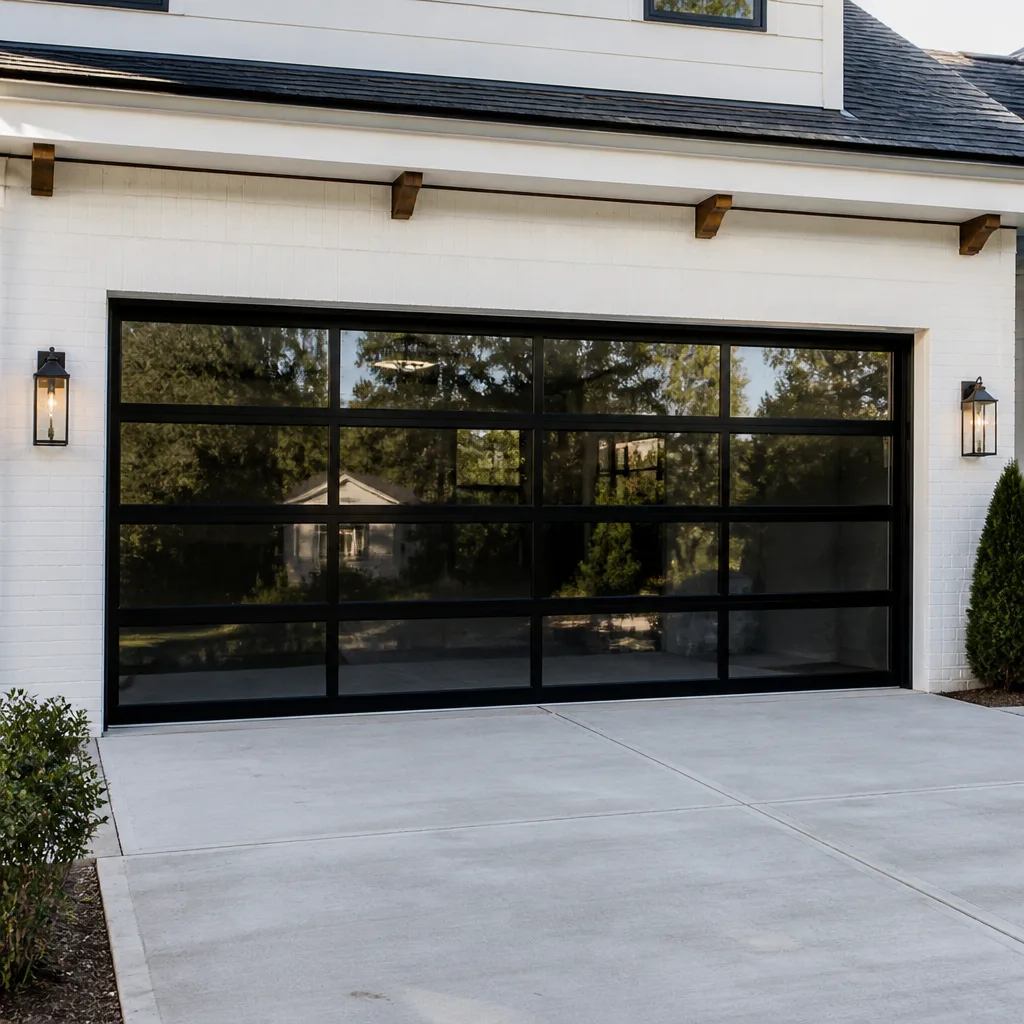 Full-view glass
 LiftMaster openers
 Chamberlain openers
Full 25-point door and opener safety check with every visit - springs, cables, rollers, tracks, and your LiftMaster or Chamberlain opener included
You get a price before we start. It does not change when the pro arrives.
Get your free estimateGarage Door Warning Signs: A Rockford Homeowner’s Reference Guide
Two garage doors can look like they have the same problem and have nothing in common. A door that shudders on the way down usually points to a roller, hinge, or track issue. A door that goes right back up before it touches the floor is almost always an opener or safety-reverse problem. Homeowners searching symptoms online tend to land on spring failure for both and call for a repair they don’t need. This guide sorts out what each sound, movement, and behavior actually tells you, what can wait a few days, what can’t, and how to describe what you’re seeing so the quote you get in Rockford matches the work that gets done.
Quick Answer
A shaking door, a door that stops halfway, a loud bang, a door that reverses on its own, and a slow opener all point to different components, and the loudest symptom is often not the failing part. Anything involving a broken spring or a frayed cable is a safety issue and needs a professional before the door is used again. Grinding, slowing, or uneven movement can usually wait a few days for a scheduled visit.
Styles & brands we work with
- Raised-panel steel
- Carriage house
- Modern flush
- Full-view glass
- LiftMaster openers
- Chamberlain openers
Table of Contents
- Symptom-to-Cause Table: What Your Door Is Telling You
- Why Is My Door Stopping Halfway? Separating Springs, Tracks, and Openers
- Which Warning Signs Are a Safety Risk Right Now?
- What Can Wait a Few Days and What Can’t
- The Most Common Homeowner Misdiagnoses
- How to Describe the Problem So You Get an Accurate Quote
- Rockford Conditions and the Wear Patterns They Create
- A Seasonal Check You Can Do Yourself
- How to Keep a Well-Behaved Door That Way
Symptom-to-Cause Table: What Your Door Is Telling You
Most garage door complaints travel through one of a few systems: the torsion spring and cable assembly, the tracks and rollers, or the opener and its safety devices. Read down the left column for what you notice, then across for what it usually means. This is a starting point for a conversation, not a diagnosis. The full picture only shows up when a technician has hands on the door.
- Loud bang from above the door, door won’t lift: a torsion spring has broken. The bang is the spring releasing, not the door slamming.
- Door lifts a foot, then stops: spring tension is off, a cable is slack, or the opener is hitting its travel limit.
- Door shakes and rattles on the way down: worn rollers, loose hinges, or a track that’s been knocked out of alignment.
- Door reverses before touching the floor, or won’t close: a safety eye out of alignment, an obstructed path, or a faulty limit setting in the opener.
- Door goes down partway and comes back up: the opener’s down-force setting is too light, or the door is binding in the track.
- Grinding or scraping from one side: a bent track section or a roller that’s jumped the rail.
- Door hangs crooked and one side lags: a stretched or frayed cable, or one broken spring in a two-spring setup.
- Opener motor hums but the door doesn’t move: a stripped drive gear, a broken chain or belt, or the manual release has been left engaged.
- Remote works only up close: a battery, antenna, or interference issue, not a door problem.
Note how many of these sound alike at a distance. A door that stops halfway could be three different failures, and the fix for each one is completely different. That’s why “my door is stuck” is a hard place to start a quote from. For a closer look at any of these, our garage door repair page explains what we typically handle on a service visit.
Why Is My Door Stopping Halfway? Separating Springs, Tracks, and Openers
A door that stops mid-travel has three realistic culprits. Sorting out which one you have takes a few minutes of careful observation and, importantly, doesn’t involve working on the door yourself. Springs under tension and cables under load can cause serious injury, so treat everything mechanical as a viewing-only exercise and let a trained technician do the handling.
- Watch the travel. Does the door stop in the same spot every time, or at random? A consistent stopping point suggests an opener limit or travel setting. Random stops point to binding, a failing spring, or a motor under strain.
- Listen while it’s moving. If the motor runs and the door doesn’t, the problem is between the opener and the door: a stripped gear, a broken belt or chain, or a released manual lock. If the door moves but strains, the opener is probably the healthy part and the resistance is in the door itself.
- Check the travel path visually. Look for a track that’s visibly bent, a roller that’s out of the rail, or debris in the track. Don’t adjust tracks or force a stuck door by hand; a door that comes off a track under spring load can fall.
- Look at the springs (from a distance). A clean gap in the coil of a torsion spring means it’s broken. Frayed wires near a drum mean the cable is compromised. Either one is a stop.
- Test the opener’s safety eye. With the door open and clear, use the wall button and see whether the door starts down. If a light flashes and it reverses, the safety eye or its wiring is a likely cause.
- Disengage the opener (door closed and unharmed). With the door fully down, pull the manual release. If you can lift the door a few inches by hand and it feels heavy, the spring is doing less than it should. If it feels light and easy, the door’s mechanics are fine and the opener is the suspect.
That last step separates spring from opener for most homeowners. If you can lift the door a few inches and it fights you, the door needs mechanical attention. If it lifts smoothly and the opener still won’t run it, the opener is where a technician will spend time.
Rockford homes built through the 1990s and 2000s show a lot of the same wear pattern. Original openers from that era are often on their second or third remote and start losing travel settings before they fail outright. A Craftsman or Chamberlain unit that’s been reprogrammed repeatedly for no clear reason is usually showing you it’s near the end of its service life, not that it needs one more reset.
Which Warning Signs Are a Safety Risk Right Now?
Some symptoms are about inconvenience, and some mean the door should not be operated at all. A broken torsion spring is the clearest case. The door is holding its full weight with whatever spring tension is left, and the opener will try to lift a door that’s heavier than the motor is designed for. Frayed or kinked cables are the second. A cable under load that lets go can whip, and it can drop the door. Our own technicians have up to 8 years of experience, and the first thing any of them checks on a Rockford door with these symptoms is whether it should be moved at all.
Treat these as stop signs:
- A visible break in a torsion spring, or a door you can’t lift more than a few inches by hand.
- Frayed, kinked, or slack cables on either side of the door.
- A door hanging visibly crooked, with one side higher than the other.
- Rollers or hinges that have pulled loose from the door, or a track that’s separated from the wall.
- An opener that will close the door with a person, pet, or car in the way, or a safety reverse that doesn’t trigger.
Don’t try to hold a door up, prop it, or “help” the opener by hand. The safest move is to keep the door closed, close the door’s manual lock, and have the work done by someone trained for it. Electrical panel work and gas lines are outside the scope of what we handle; if your problem involves those, a licensed electrician or gas fitter is the right call.
What Can Wait a Few Days and What Can’t
“Emergency” gets used loosely in the garage door trade. The honest test is whether the door can be operated without risk and whether the home is still secure. If the door is stuck closed and locked, you’re inconvenienced but safe. If the door is stuck open, you have a security problem and a weather problem at once.
These can usually be scheduled for a normal visit:
- Noisy, rattling, or jerky operation with the door still lifting and closing.
- A slow opener, or one where the remote only works at close range.
- A single broken light on the opener, or a keypad that’s stopped working.
- Cosmetic dents or scratches on the door panel.
- A door that’s become noticeably louder over a few weeks.
These deserve a call today:
- Any broken spring or cable, or a door that can’t be opened by hand.
- A door stuck open with the house accessible from the street.
- A car trapped inside the garage.
- An opener that will close the door on an obstacle.
- A door that’s come off its track and is hanging.
We answer 24/7. If a call outside dispatch hours is about a door you can’t operate safely, we’ll book it into the next opening, Sunday through Friday, 7am to 7pm. Fast dispatch from 7am to 7pm means a broken spring in the morning is usually a same-day repair. Doors that fail on a Saturday wait until Sunday, because we’re closed on Saturday.
The Most Common Homeowner Misdiagnoses
Search engines reward confident answers, and garage door symptoms get confidently mislabeled all the time. Some patterns come up again and again across Rockford homes, and seeing the true cause is often a matter of knowing what to rule out first.
- “It’s a broken spring” for any door that won’t lift. A dead opener, a released manual lock, or a stripped drive gear looks identical from the outside. If the motor makes no noise at all when you press the button, the opener’s electrical side is the more likely problem.
- “The opener’s bad” for a door that strains. Heavy lifting is usually a spring or balance issue. Replacing the opener on a poorly balanced door simply puts a new motor in front of the same problem.
- “The track’s bent” for a shaking door. Loose hinges and worn rollers cause most rattle. Tracks are sturdier than they look, and a track that’s truly out of place usually shows it in one spot on one side.
- “The safety sensors are broken” for a door that reverses on the floor. The eyes are frequently fine. The down-force setting is often the real culprit, or something is binding in the track.
- “The remote’s dead” for an opener that won’t respond. A wall button that works while the remote doesn’t is a remote or receiver issue. A wall button that’s also dead points to power, wiring, or the logic board.
- “It just needs lubricant” for a loud door. Lubricant helps a healthy door stay quiet. It doesn’t fix a worn bearing, a cracked roller, or a hinge that’s pulling away from the panel.
In our experience, the misdiagnosis usually costs the homeowner more than the repair. Choosing the wrong service call means paying for a visit that doesn’t solve the problem, then paying for the right visit afterward. This is where a specialist helps: Bramble Garage Door Repair works only on garage doors and openers, so the same technician who inspects the mechanism also knows the opener’s internals, and doesn’t have to hand the job to someone else.
How to Describe the Problem So You Get an Accurate Quote
The quality of a phone quote depends almost entirely on the quality of the description. A specialist who works on LiftMaster and Raynor systems every week can price a job from a good description much more accurately than from “my door doesn’t work.” Answer these questions before you call. They take five minutes and they can save a wasted visit.
- What happens, exactly? Does the door move at all? Does the motor run? Does the door move partway and stop in the same place each time?
- What does it sound like? A bang, a grind, a scrape, a hum with no movement, or silence. Each points somewhere different.
- When did it start? Overnight, gradually over weeks, or after a storm, bump, or power outage.
- What’s the door made of and roughly how wide? A single-car steel door and a double-car insulated wood door carry different loads.
- What brand is the opener? A model number from the label on the motor housing is ideal.
- Has anyone opened it by hand or tried to adjust it? A partly adjusted track or spring changes what the technician finds.
- Is the door safe to move right now? If there’s a broken spring, a frayed cable, or a crooked door, say so on the phone.
Send a photo of the springs, the track, and the opener label along with your answers and the estimate gets sharper still. We can price most spring, cable, roller, and opener jobs from a solid description, then confirm the final figure on site before any work starts. That’s a real protection for you: the written estimate sets the price, and no one starts a job without your agreement on it.
Rockford Conditions and the Wear Patterns They Create
Rockford’s seasons put garage doors through a specific cycle. A northern Illinois winter means repeated freeze-thaw around the door opening, road salt carried in on tires that dries on the bottom panel, and months of contraction and expansion in the track and frame. The door that travels smoothly in July often develops a rattle or a stiff spot by February. That’s a seasonal pattern, not a sudden failure, and knowing it helps you decide whether you’re looking at wear or a real problem.
What we see most in Rockford:
- Stiff, jerky travel in deep cold. Lubricant thickens, rollers get harder, and the whole system moves with more resistance. Often it clears up as temperatures rise, and a proper lubrication routine prevents most of it.
- Bottom-panel corrosion. Salt and slush collect at the lowest panel and the hinge line. Left alone, that corrosion eats into the hinge mounts and the panel’s edge.
- Shifting frames and tracks. Freeze-thaw cycles move the ground and the structure around the door, which can nudge a track out of line over several winters. That’s a frequent cause of that grinding or scraping sound.
- Seal and weatherstripping wear. A door that closes fully but lets cold air in is usually showing you a worn bottom seal rather than a mechanical fault.
Wind and storm events come through Rockford too, and a door panel or track that takes a hit needs a close look rather than a quick patch. If a panel is bent, the roller on that side is likely carrying a twist, and the tracking and opener get involved in the same repair.
If you’re new to a home on the west side or in a Rockford subdivision with original builders’ doors, it’s worth knowing which brand and opener you have before a problem starts. Many Rockford homes came with one of the brands we work on every day, and knowing that saves a step when something fails.
A Seasonal Check You Can Do Yourself
You don’t need tools to catch most developing problems. This is a visual and auditory checklist, done from the floor, with no adjustments. Do it twice a year, once in fall before the cold and once in spring after the salt.
- Look at the springs from a distance. Check for a clean gap in the coil, rust, or discoloration. Don’t touch them.
- Look at the cables. Frayed strands, kinks, or slack on either side mean stop using the door.
- Run the door and listen. Rattle, grind, or scrape on the way down is the signal to write it down for a technician.
- Test the safety reverse. Put a small object in the door’s path and close it. If it doesn’t reverse, that’s a call today.
- Check the balance by eye. With the door closed and the opener disengaged, does the door sit level? Crooked means get it looked at.
- Look at the bottom seal and panels. Cracks, missing strips, and rust along the bottom edge are worth noting.
- Check the opener label. Write down the brand and model, and put it in your home file.
Anything on this list that looks mechanical, leave to a technician. If you’d rather have one visit cover the check and the fix, our Rockford page explains what we handle locally. And if the opener is what’s failing, we keep opener work in the same visit as door work, so the garage door opener repair doesn’t become a second appointment.
How to Keep a Well-Behaved Door That Way
Most of the warning signs in this guide appear on a door that never got attention. It takes very little to keep a healthy door healthy. None of it replaces a proper inspection, but it keeps the smaller issues from becoming bigger ones.
- Keep the tracks clean. Wipe debris and grit out with a damp rag. Don’t lubricate the tracks themselves; that attracts dust and causes rollers to slip.
- Lubricate the moving metal parts. Hinges, rollers, and the spring, using a door-specific lubricant. Reapply before the cold season, not after.
- Watch the balance. A door that needs a hand to help it up is out of balance, and dragging the opener through that wears it out faster.
- Check the safety reverse regularly. It’s the one feature that protects people and pets and it’s easy to test.
- Keep the door’s path clear. Sometimes the simplest fix for a door that won’t close is a bicycle or a bin near the safety eye.
- Know your brand. A note with the door and opener brand, plus the opener model, saves a diagnostic step when something goes wrong.
We work on 8 of the most common residential door and opener brands, including Clopay, Amarr, Wayne Dalton, Genie, LiftMaster, Chamberlain, Craftsman, and Raynor. That means we’re unlikely to look at your door and find a brand we can’t source parts for or a system we don’t recognize. When a door is beyond repair, we’ll say so, but most door problems don’t need a full replacement. Let’s find out first.
Common Mistakes to Avoid
- Forcing a stuck door. If a spring is broken or a cable is compromised, forcing the door can drop a panel or damage the opener. Shut it, lock it, and call.
- Replacing the opener to fix a mechanical problem. A door that strains is usually a balance issue. A new opener doesn’t lighten the door.
- Adjusting or oiling the tracks. Track adjustments are a precision job. Track lubricant attracts grit and creates the next problem.
- Ignoring a single broken spring in a pair. If one spring is gone, the other is carrying twice the load and is close behind. Replace them together so they match.
- Assuming a loud door just needs a warranty call. Noise is a symptom, and the cause might be a cracked roller, a worn bearing, or a track that shifted over the winter.
- Hiring the cheapest quote without a written scope. Ask what’s included: which parts, which brand, and whether the price is the whole job or just the diagnosis.
- Putting off the safety reverse test. A door that closes on a child’s scooter today may not be opening on a person tomorrow.
See the difference
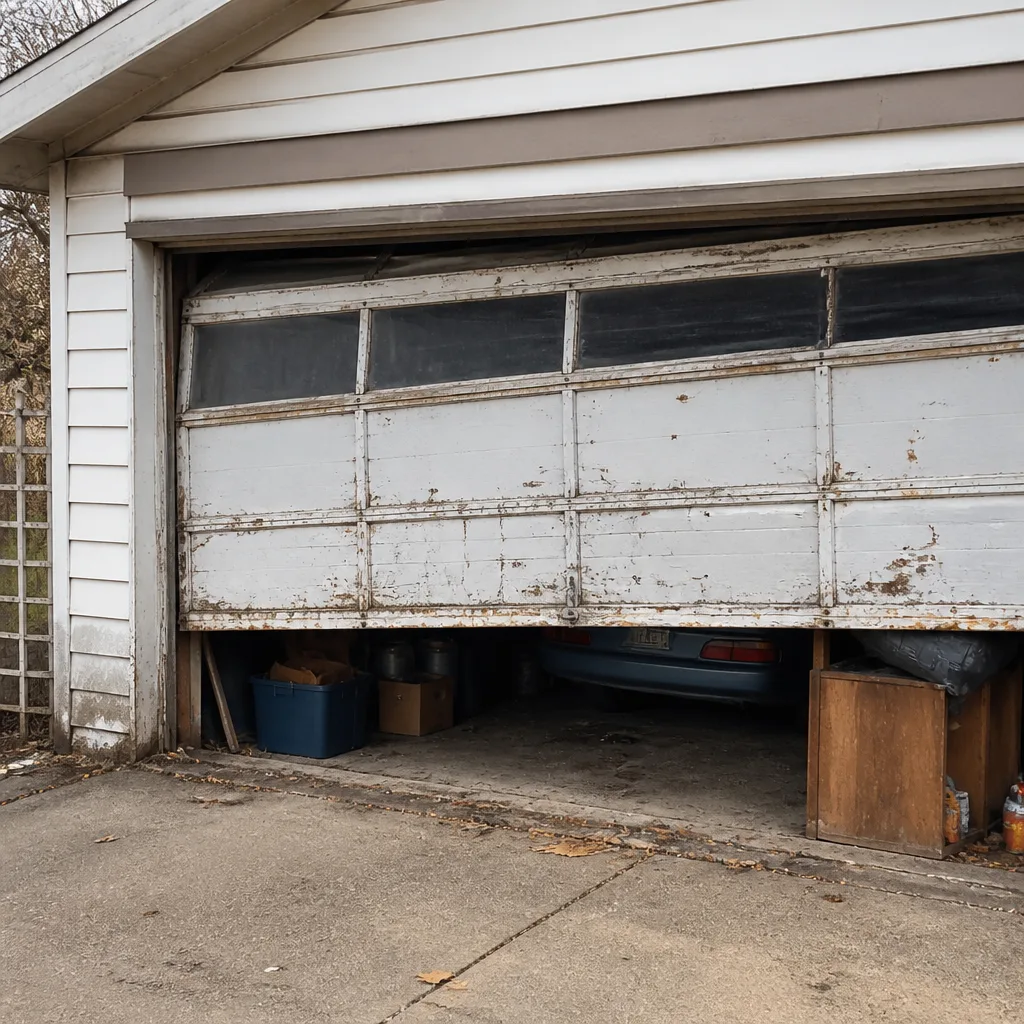 Before
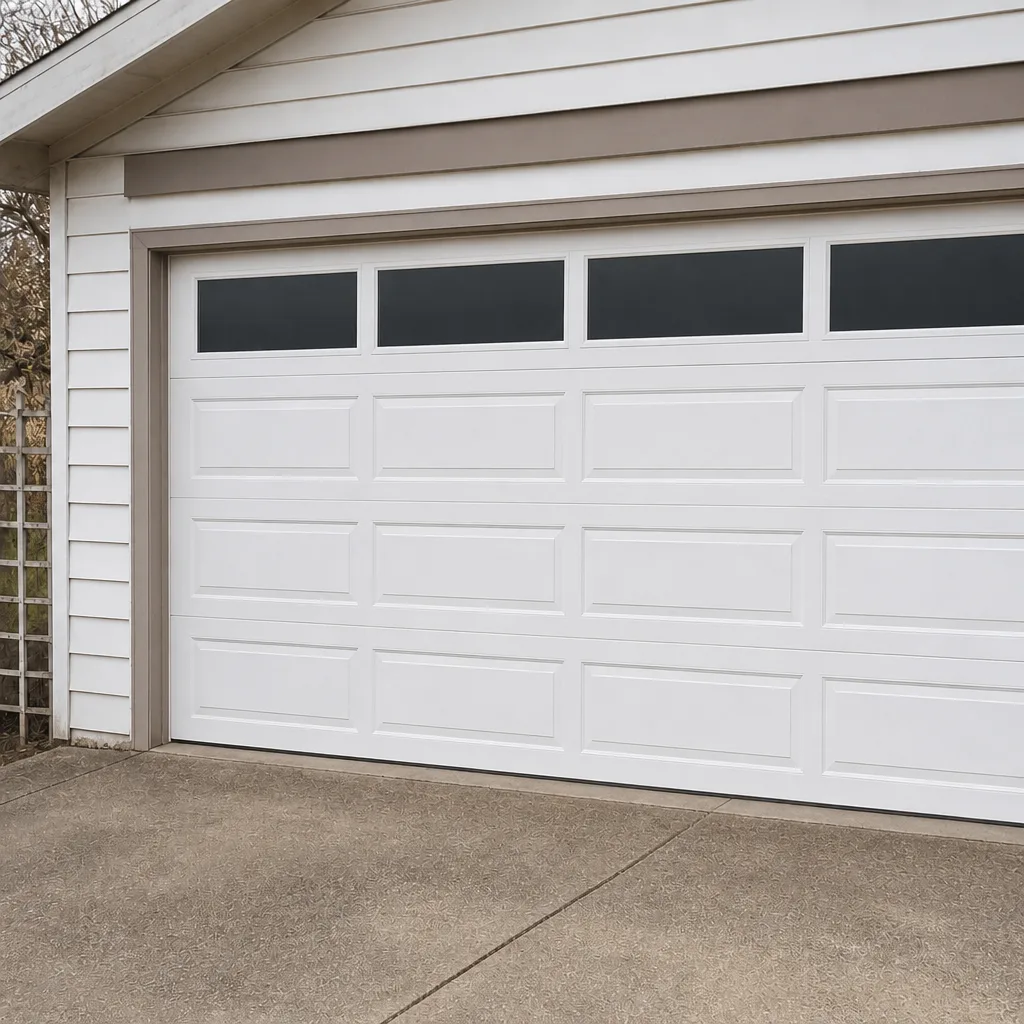 After
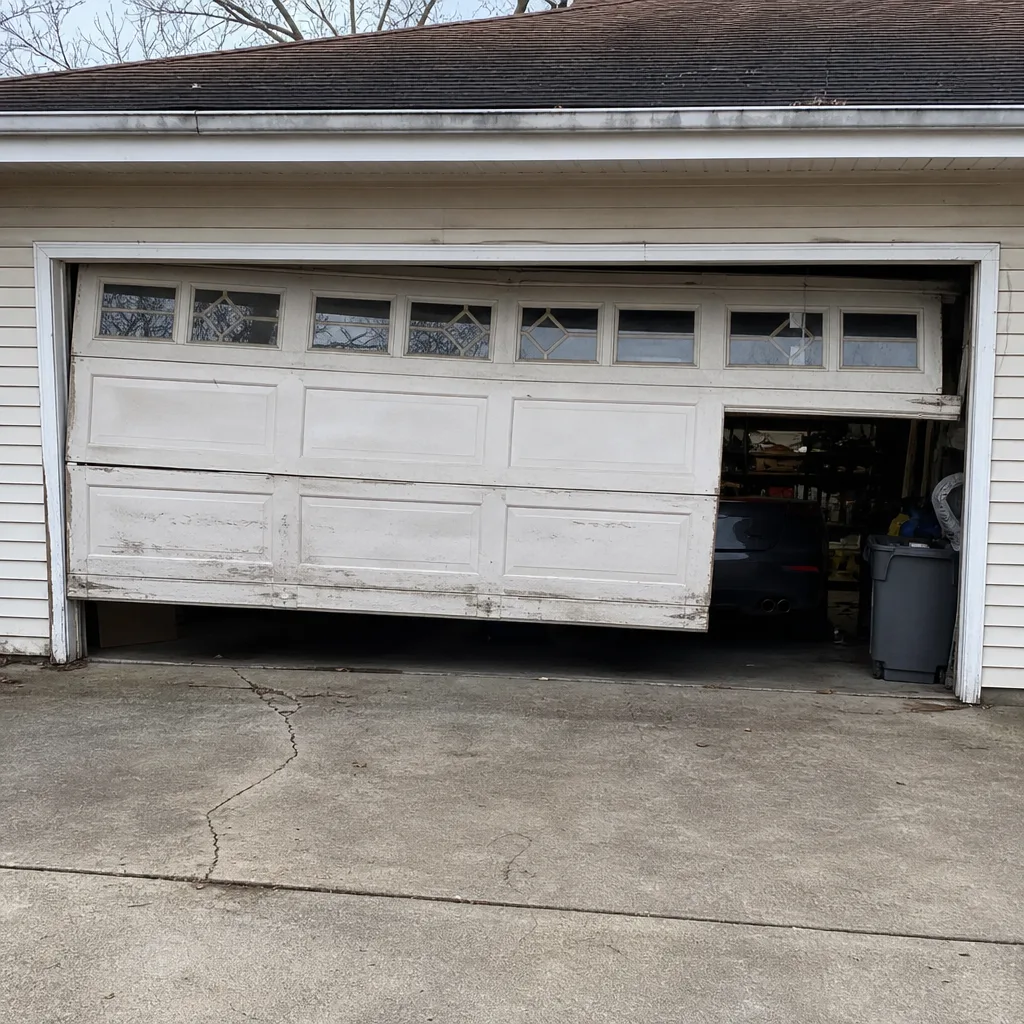 Before
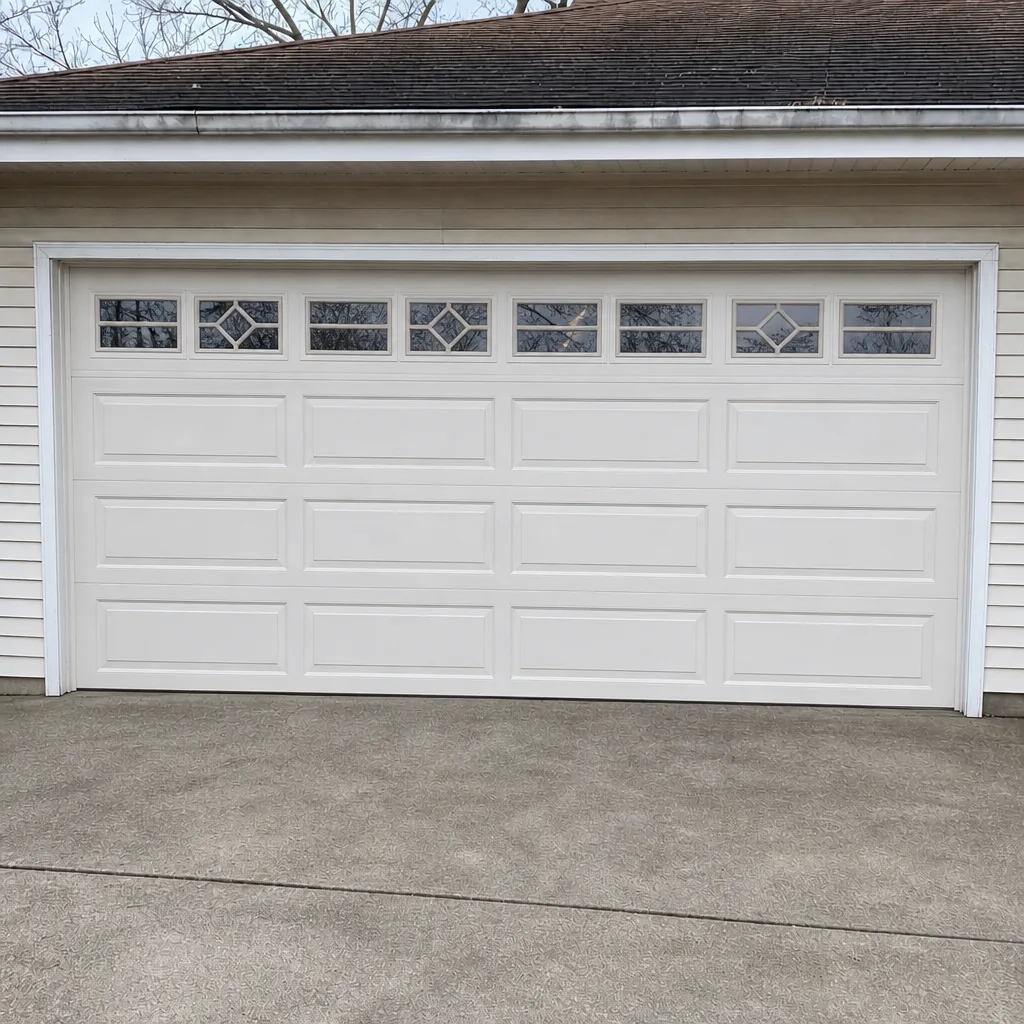 After
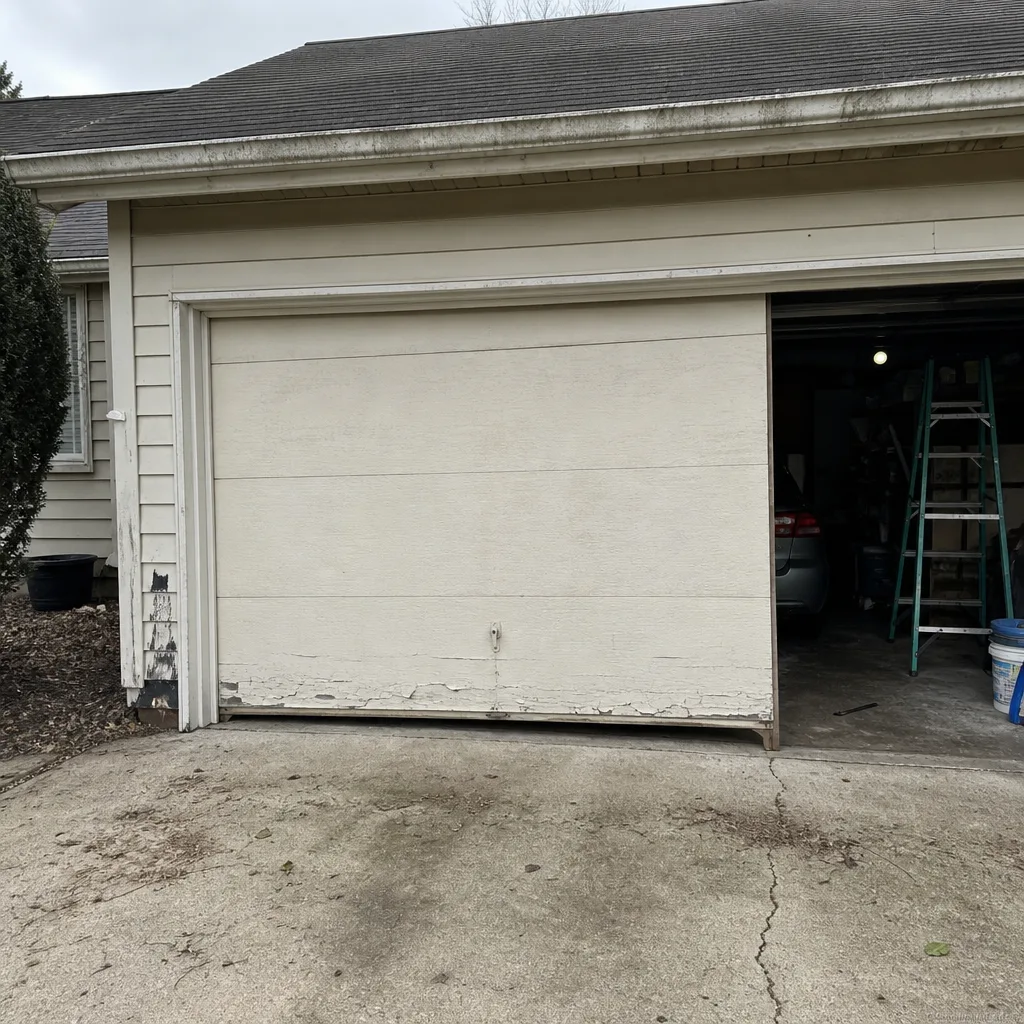 Before
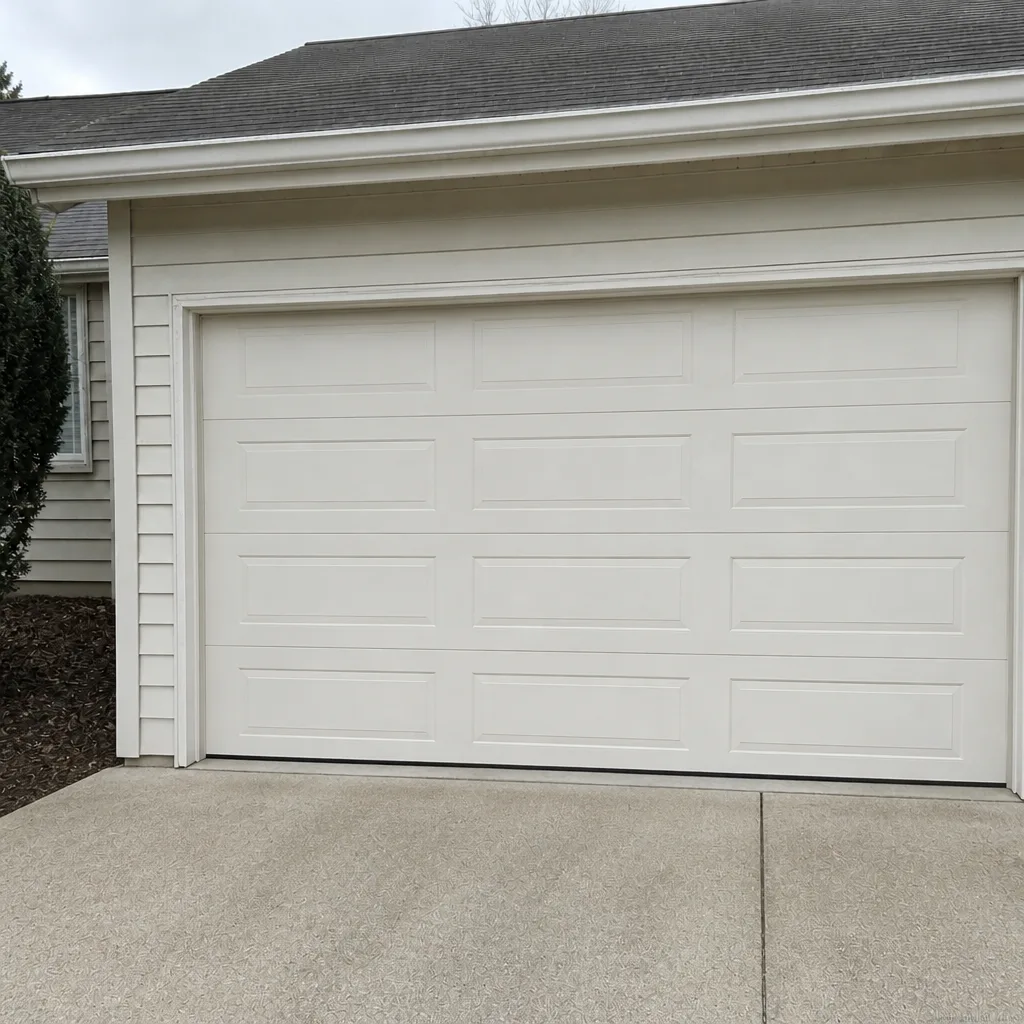 After
When to Call a Professional
Call a professional when a spring is broken, a cable is frayed, the door is crooked or off its track, or the opener runs without moving the door. Call when the safety reverse fails, when the door is stuck open and the house is exposed, or when a car is trapped inside. For grinding, rattling, or slowing, schedule a normal visit; don’t spend weeks ignoring it while a small fix becomes a bigger one. Bramble Garage Door Repair offers free estimates in Rockford. Call (855) 758-5321. We answer 24/7, with fast dispatch from 7am to 7pm, Sunday through Friday, and we’re closed on Saturday. The price is agreed in writing before any work starts.
Frequently Asked Questions
A sudden change in sound is usually the first thing people notice, before any actual fault. A door that’s been quiet for years and then starts to rattle or grind is telling you about wear in the rollers, hinges, or track before it becomes a full failure. The second most common early sign is a door that doesn’t sit level when closed. Catching either early usually keeps the repair small. Call (855) 758-5321 for a free estimate.
Disengage the opener with the door closed, then try to lift the door a few inches by hand. If it’s heavy and fights you, the spring or balance is where the problem sits. If it lifts smoothly but the opener won’t run it, the opener is the suspect. This is a viewing test only; don’t work on the spring or cable yourself. Call (855) 758-5321 and describe what happened, and we can narrow it down before the visit.
Yes, a broken spring is dangerous wherever it happens, and Rockford winters make it more likely because cold-weather contraction and heavy seasonal use stress the spring. A door with a broken spring has a far worse load on the remaining hardware and on the opener. Don’t run the door until it’s been checked by a trained technician. Call (855) 758-5321. We answer 24/7, and fast dispatch from 7am to 7pm gets a same-day visit in most cases.
Some tasks are genuinely safe for homeowners: cleaning the tracks, testing the safety reverse, changing a remote battery, and applying door lubricant to the hinges and rollers. Anything involving springs, cables, drums, or track realignment is not a homeowner job; those parts sit under tension that can cause serious injury if handled wrong. When the symptom is mechanical, leave it to a professional. Call (855) 758-5321 for a straight answer about what you’re looking at.
Noise without loss of function can usually wait a few days, so book a normal visit rather than a same-day one. Any noise accompanied by a broken spring, a frayed cable, a crooked door, or a door that won’t lift by hand shouldn’t wait at all. And if the noise comes with a car trapped inside or a door stuck open, call today. Call (855) 758-5321. We answer 24/7, with dispatch Sunday through Friday, 7am to 7pm.
Describe the symptom, the sound, and the exact point in travel where the door stops, and note whether the motor runs when the door doesn’t move. Add the door width, opener brand, and model if you have it. That’s enough information to price most jobs accurately from the first call. Call (855) 758-5321 for a free estimate; the written estimate sets the price before any work begins.
The Bottom Line
The core lesson of this guide is that symptoms point at systems, not parts. A door that shakes, a door that stops halfway, and a door that reverses on the floor all sound like the same complaint and aren’t. Read the symptom table, do the hand-balance test when the door is closed and safe to try, and describe what you’re seeing in plain terms rather than guessing at a diagnosis. Stop using any door with a broken spring, a frayed cable, or a crooked hang, and keep the tracks clear the rest of the time. That approach gets you an accurate quote on the first call and the right repair on the first visit. Bramble Garage Door Repair does garage doors only, so the same specialty covers your door’s mechanism and your opener as one system.
Written by the team at Bramble Garage Door Repair.