
Last updated November 16, 2026
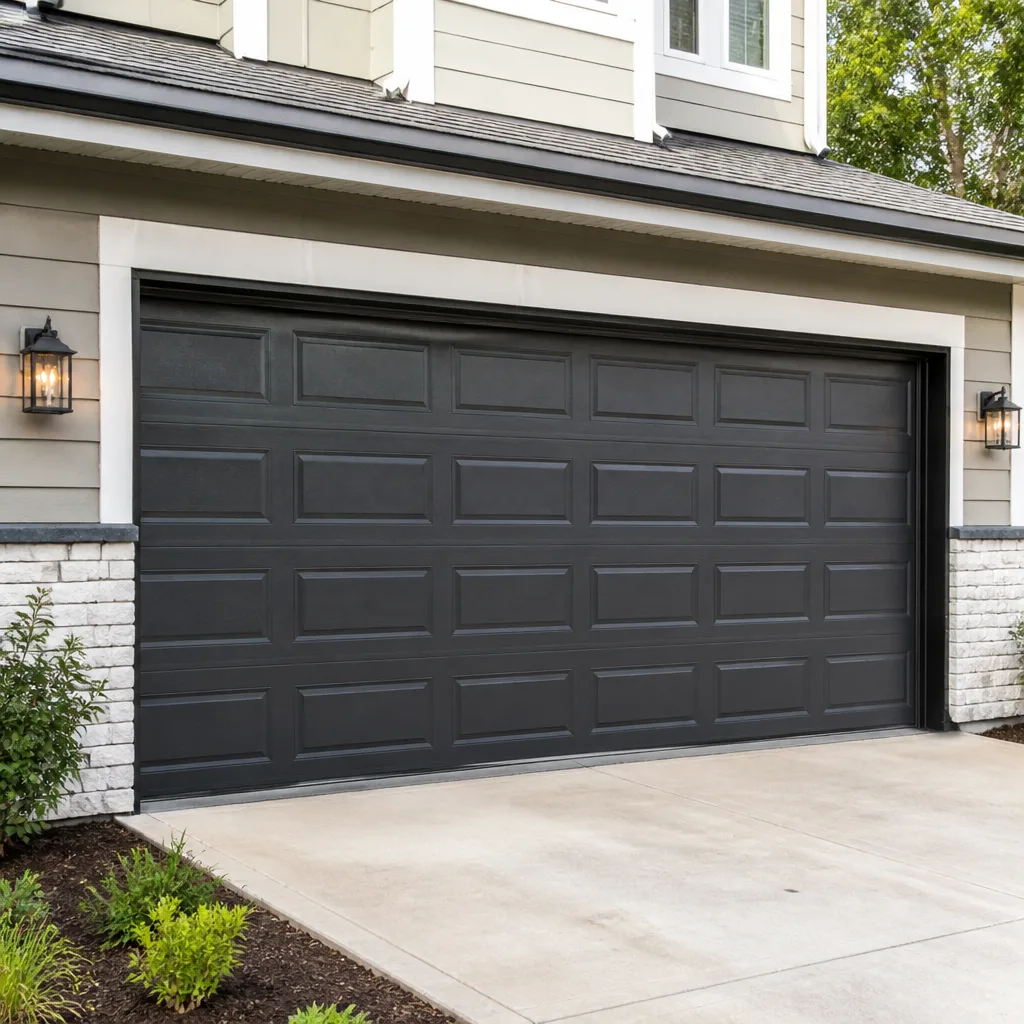 Raised-panel steel
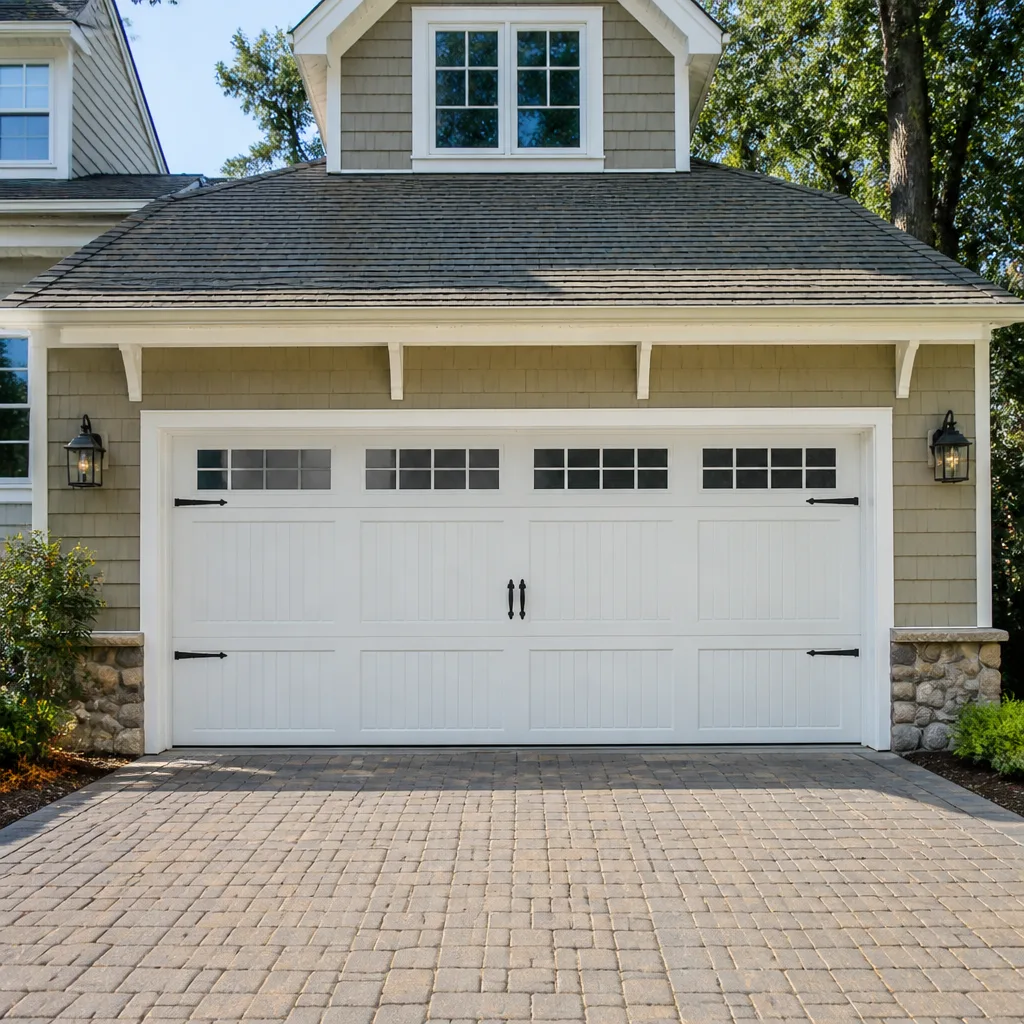 Carriage house
 Modern flush
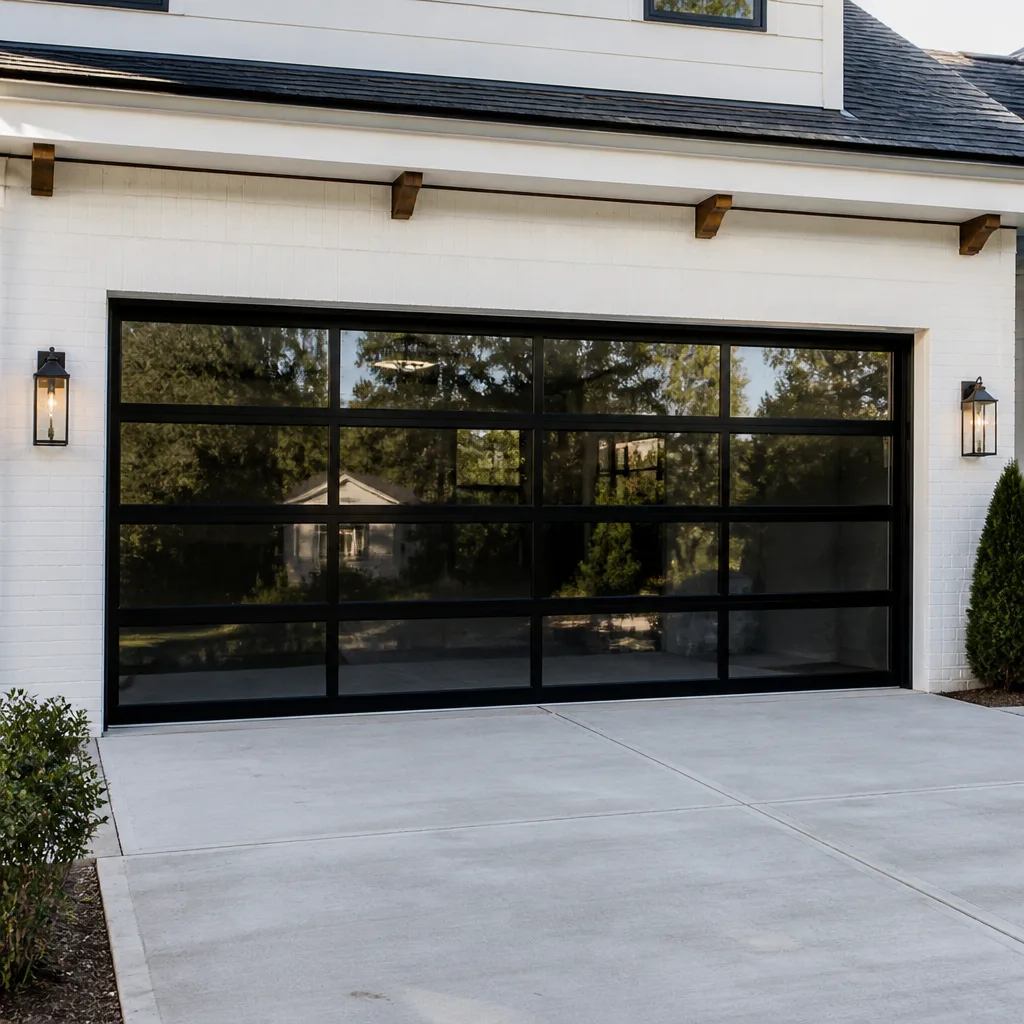 Full-view glass
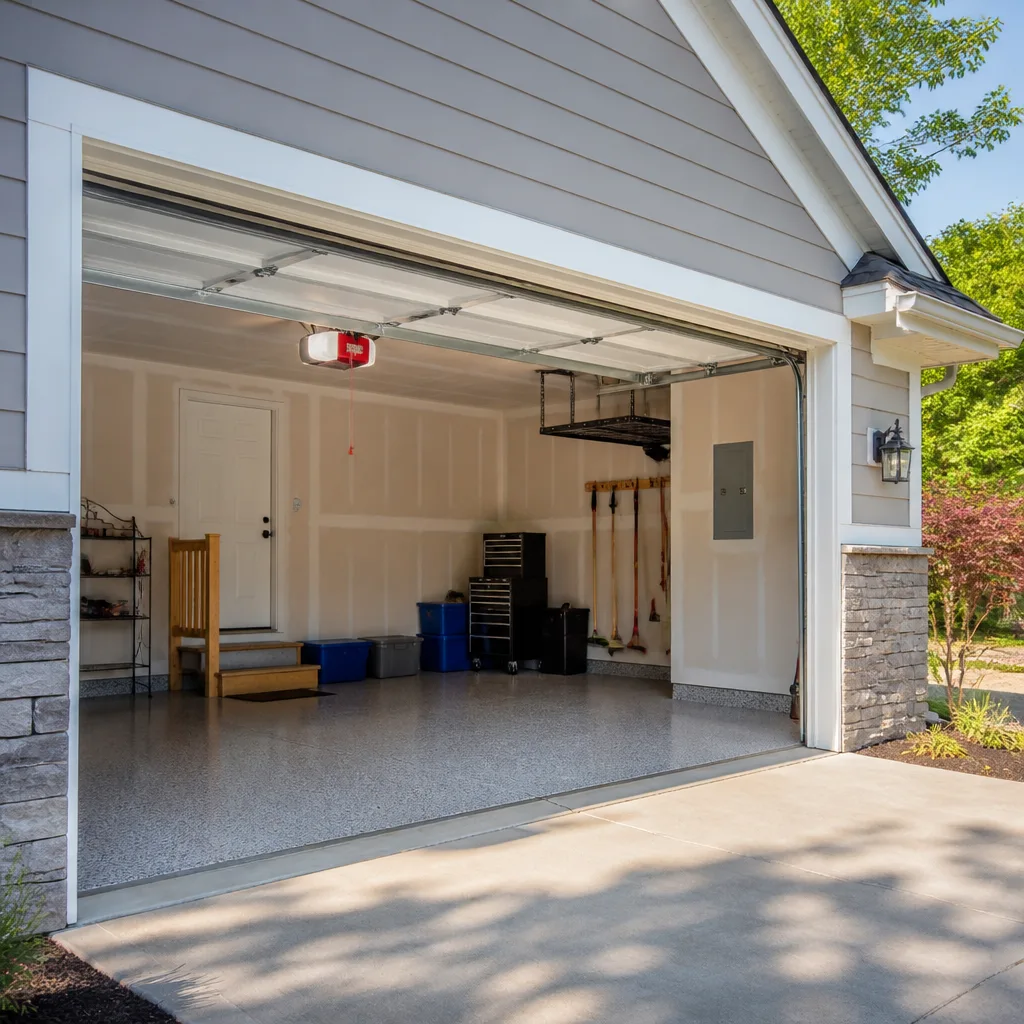 LiftMaster openers
 Chamberlain openers
Full 25-point door and opener safety check with every visit - springs, cables, rollers, tracks, and your LiftMaster or Chamberlain opener included
You get a price before we start. It does not change when the pro arrives.
Get your free estimateGarage Door Emergency Preparedness Guide for Rockford Homes
When a garage door spring snaps at 7 a.m. in January in Rockford, the car is trapped, the manual release is unfamiliar, and the temperature is 12 degrees. None of that has to be an emergency if you’ve thought it through once beforehand. Most garage door “emergencies” we hear about aren’t random bad luck. They cluster around a few predictable triggers: skipped maintenance, power outages, and the deep cold snaps that move through the Rockford area most winters. This guide walks through the three failure scenarios most likely to hit a Rockford home, what to do in the first ten minutes, and what to have ready when you call so the right parts show up on the first visit.
Quick Answer
A garage door emergency in Rockford is manageable if you know three things: where your manual release cord is and how to use it without unhooking the trolley, how to secure the door from the inside after a spring failure, and what to tell a technician so the right parts arrive. Never force a stuck door, never prop a partially open door in freezing weather, and always confirm the door is fully closed and locked before you leave the house. Free estimates are available by calling (855) 758-5321.
Styles & brands we work with
- Raised-panel steel
- Carriage house
- Modern flush
- Full-view glass
- LiftMaster openers
- Chamberlain openers
Table of Contents
- The Three Garage Door Emergencies Rockford Homes Actually Face
- How to Use the Manual Release Cord Safely
- What to Do When a Door Gets Stuck Partially Open in Winter
- How to Secure the Garage After a Spring Failure
- Power Outage Protocol: Battery Backup vs. Manual Release
- What to Have Ready When You Call for Service
- The 10-Minute Pre-Winter Check That Prevents Most Emergencies
- When to Call a Professional
The Three Garage Door Emergencies Rockford Homes Actually Face
In our experience working on Rockford doors, most urgent calls fall into three buckets, and each one has a different first move. Knowing which one you’re in keeps you from doing something that makes the repair bigger.
1. Broken torsion or extension spring. You hear a loud bang from the garage, the door won’t lift, and the opener runs but nothing happens. This is the most common spring failure and, in Rockford, it spikes in cold weather when metal contracts and springs that were already stressed give out. Do not try to lift the door by hand to test it – a door with a broken spring can weigh well over a hundred pounds and drop without warning. Garage door repair for a broken spring is a same-day job with the right technician, but the door stays down until then.
2. Opener failure or power loss. The door won’t move, the opener is silent, and the wall button does nothing. This could be a tripped breaker, a dead logic board, or a snapped drive belt. If the door worked this morning and now doesn’t, check the breaker first, then the wall outlet, before assuming the worst. Garage door opener repair covers the electrical and mechanical side of this scenario.
3. Door off the track or stuck mid-travel. The door is crooked, one side is higher than the other, or it stopped halfway and won’t finish the cycle. This is the scenario where homeowners most often cause extra damage by forcing the door. A roller that jumped the track is a straightforward fix when the door is at rest. It becomes a bent panel and a twisted track when the opener is cycled repeatedly hoping it will “catch.”
In a Rockford winter, all three can happen in the same week across a single block, especially after the first hard freeze. If you’ve prepared for each one, the response is calm. If not, the panic is what does the damage.
How to Use the Manual Release Cord Safely
The manual release cord is the red-handled rope hanging from the trolley on your opener rail. It’s the single most misunderstood piece of hardware on a residential garage door. Used correctly, it lets you open the door by hand during a power outage. Used incorrectly, it detaches the door from the opener in a way that’s difficult to reconnect, and it can drop the door unexpectedly on anyone standing under it.
Here’s the correct sequence, and why each step matters:
- Close the door first if it’s fully open. A door that’s open with the opener disconnected is unsupported and can come down hard. Bring it down to the closed position using the wall button before you pull the release.
- Stand clear of the door path. The door can move once the trolley releases. Keep children and pets out of the garage bay, and stand to the side rather than under the door.
- Pull the cord straight down, once, firmly. Don’t yank it. Don’t pull at an angle. Don’t pull it twice. On most openers, including common LiftMaster and Chamberlain units, a single firm pull releases the trolley from the carriage.
- Lift the door slowly by hand from the bottom center. If it feels extremely heavy, the spring is broken and you should not attempt to lift it further. Let it back down and call for service.
- To reconnect, close the door completely first. Then pull the release cord again to reset the trolley, and run the opener. The trolley re-engages as it travels.
The mistake that causes most reconnection problems is pulling the release while the door is open and the trolley is partway down the rail. Then the trolley and the carriage are out of sync, and the opener won’t pick the door back up. If the door has been disconnected and the trolley is out of position, the fix is to close the door fully, pull the release again to reset the trolley position, and cycle the opener once. On Genie and older Craftsman openers, the reconnect procedure is similar but the trolley geometry differs slightly – the manufacturer’s manual for your model has the exact steps.
What to Do When a Door Gets Stuck Partially Open in Winter
A door stuck halfway open in a Rockford January is a problem on a timeline. It’s an open door to the cold, which means the pipes over your laundry room or garage utility sink can freeze while you’re inside trying to reach a technician. And it’s a security gap, because the garage is now open to the alley or the street.
The instinct is to force the door down by hand off the bottom edge. Don’t. On a door that’s off track or has a bent roller, forcing it down can warp a section, bend a track, or snap a hinge loose at the attachment point. Any of those turns a one-hour repair into a door replacement.
What to do instead:
- Stop cycling the opener. Every attempt strains the opener gear and stretches the drive belt or chain. If the door stopped once, it’s not going to “work itself loose.”
- Look for the obvious. A roller that’s jumped the track, a snapped torsion cable, an object jammed between panels, or ice built up at the bottom seal. You can identify the problem without touching a loaded part.
- If the door is safely supporting itself, leave it. A door at the midpoint on intact springs is unlikely to fall. A door that’s creeping down on its own is not safe – get out from under it and call.
- Address the freeze risk separately. Close the interior door between the house and the garage. If your water heater or laundry is in the garage, that room gets cold fast. A space heater is a fire risk in a garage with fuel and stored goods – don’t.
- Call for same-day repair. A stuck door is one of the fastest service calls to complete when the cause is visible. Call (855) 758-5321; we answer 24/7 with fast dispatch from 7am to 7pm.
If the temperature is dropping and the door can’t be closed, treat it as a same-day call rather than a next-week project. Frozen pipes cost far more than a service call.
How to Secure the Garage After a Spring Failure
When the spring breaks, the door comes down hard and stays down. That sounds like a secure state. It usually isn’t. A door at rest on a broken spring sits on the bottom seal, but it isn’t locked, and on many doors it can be lifted several inches by hand from the outside – enough for someone to reach the release cord and open it the rest of the way.
Here’s how to secure a Rockford garage from the inside after a spring failure, while you wait for the technician:
- Confirm the door is fully down. Push gently on the bottom edge from the inside to feel whether it’s seated against the floor the whole way across. If one side is up, the door is off-level and needs to be treated carefully.
- Engage the slide bolt or latch. Many residential doors have a manual slide bolt on one or both sides that engages into the vertical track. If yours has one, throw it. This is the single most effective step.
- Use a door bar if you have one. A cut-to-length bar or a heavy dowel laid in the track above the bottom roller prevents the door from being lifted. This is the standard “garage door lock bar” setup.
- Lock the entry door between the house and garage. It’s tempting to leave it open for convenience, but if the garage is compromised, that door is now your home’s perimeter.
- Don’t padlock the outside handle. It seems obvious, but a padlock on the exterior handle prevents the technician from getting in when they arrive, and it does nothing to stop a lift from the bottom.
- Tell the technician about the lock bar when you call. They’ll need to know it’s there before they cycle the door, so it can be removed first.
Once the spring is repaired, check that the slide bolt is disengaged before the door is operated for the first time. Running the opener with the bolt engaged will strip the gear and snap the bolt in the same cycle.
Power Outage Protocol: Battery Backup vs. Manual Release
Rockford gets its share of power interruptions, especially in summer storms and winter ice events. If your opener was installed in the last several years, it likely has a battery backup built in. If it’s older, it doesn’t, and your only option is the manual release. Knowing which kind you have saves you from pulling the release cord on a door you could have opened with the wall button.
How to tell:
- Look for a battery compartment on the opener housing. Most LiftMaster and Chamberlain models with backup have a visible battery door on the motor unit, usually a small rectangular panel. Openers with backup often have a small LED indicator on the housing that shows battery status.
- Check the wall control. Opener wall controls on battery-backup units typically have a test button labeled for battery. If your wall control has one, you have backup.
- Read the model number on the opener label. A Genie or Craftsman unit from before the battery-backup era won’t have a battery bay. If you’re not sure, call and describe the model number to the technician – the answer takes 30 seconds.
If you have battery backup, the door operates normally during an outage for a limited number of cycles. Don’t burn those cycles. Open the door once, get the car out, close it, and leave it alone. The battery is sized for a handful of operations, not a weekend.
If you don’t have backup, use the manual release. The correct procedure is in the section above – close the door first, stand clear, pull once. Do not attempt to hold the door open with a prop while the car is in the garage; a spring-loaded door that’s disconnected from its opener has nothing holding it up if a prop slips.
One more thing on outages: on many modern openers with battery backup, the door safety sensors still work during an outage, but the opener’s travel limits may be slightly off after the power returns. Cycle the door once from inside and watch it complete the full open and close before you drive in or out.
What to Have Ready When You Call for Service
The single biggest factor in how fast an emergency visit gets resolved is whether the technician arrives with the right parts. Garage door hardware is brand-specific at the component level. A torsion spring for a Clopay door may have a different wire gauge and length than one for an Amarr door of the same nominal size. An opener carriage for a Genie won’t fit a LiftMaster rail. When you call, having the right information ready lets the technician load the right parts before they leave.
Have this list ready before you dial:
- Door brand and, if visible, model. Look for a sticker on the inside face of a door panel, or on the vertical stile. Clopay and Amarr both mark their doors this way.
- Door size. Single car (8 to 9 feet wide) or double car (16 feet wide) is usually enough to start.
- Opener brand and model number. The label is on the back or side of the motor housing. LiftMaster, Chamberlain, Genie, and Craftsman all label clearly.
- What happened. “Heard a bang from the garage this morning, door won’t lift” tells the technician it’s a spring. “Door went up halfway and stopped” tells them it could be a track, roller, or limit switch issue.
- What you’ve already tried. If you’ve cycled the opener a dozen times or pulled the release cord, say so. It changes the diagnosis.
- Any lock bar or slide bolt currently engaged. Critical for the technician’s first move.
- Your address and gate or access code, if applicable. Rockford has plenty of homes with gated driveways or rear-alley access, and confirming access upfront avoids a second trip.
That’s a five-minute list, and it can turn a two-visit repair into a one-visit repair. We work on the brand you already have, and our technicians have up to 8 years of experience diagnosing both the door and the opener as an integrated system. Call (855) 758-5321 and have this list in front of you.
The 10-Minute Pre-Winter Check That Prevents Most Emergencies
Most garage door emergencies in Rockford don’t start in the moment they happen. They build up over months. A spring that’s been slowly losing tension through summer finally gives out during the first cold snap. A roller that’s been dragging quietly finally jumps the track on a windy day. Ten minutes of inspection in the fall catches most of these before they become emergency calls.
Run this check once a year, ideally before the first hard freeze:
- Open and close the door by hand. Disconnect the opener with the release cord (door fully closed first). Lift the door halfway. It should feel balanced – roughly the same effort to hold it as it takes to lift it. If it wants to fall or wants to fly up, the springs need adjustment or replacement.
- Look at the springs. Check the coils for a visible gap – a broken spring is usually obvious. Also look for heavy rust or sagging. Cold makes old steel more brittle; a spring that’s already showing rust is on borrowed time.
- Watch the rollers. Every roller should turn freely inside its hinge. A roller that’s flat-spotted or doesn’t spin will wear the track. Nylon rollers wear faster than steel in cold, so check them more often if you have nylon.
- Check the bottom seal. A cracked or compressed seal lets cold air and moisture in, which is what freezes garage floors and rusts tracks. Rockford winters are hard on seals.
- Test the safety reverse. Put a 2×4 flat on the ground under the door and cycle it closed. The door should reverse on contact. If it doesn’t, the safety system needs adjustment – this is not a door to operate until it’s fixed.
- Look at the track alignment. Stand inside the garage and look up the length of each vertical track. It should be straight. Any obvious bend, dent, or loosened bracket needs a professional look.
- Check the opener’s force setting. Modern openers have a force adjustment that affects how hard the door pushes before reversing. If the door is stopping and reversing for no apparent reason, the force setting or the safety sensor alignment is usually the culprit.
None of these are jobs you should do yourself beyond the visual check. Never adjust a torsion spring, never loosen a cable, never attempt to re-tension the spring drum. Those are the parts that cause serious injury, and they need a trained professional. What you’re looking for is a reason to call – not a reason to try your own repair.
If you want a professional check of your door’s overall condition, that’s what our Bramble Garage Door Repair team does every day in the Rockford area. And if you’re also thinking about the door itself, not just the hardware, it may be worth reading about garage door installation options alongside repair.
Common Mistakes to Avoid
- Pulling the manual release with the door open. This is the #1 mistake we see. It detaches the door from the trolley while the door is unsupported, and one of two things happens: the door drops, or the trolley and carriage are so far out of sync that the opener won’t re-engage. Always close the door fully first.
- Forcing a stuck door down or up by hand. In Rockford winter, a door that’s frozen to the floor or stuck on an iced track will bend panels and snap hinges if you force it. If the door won’t move with moderate effort, stop; that’s a service call, not a wrestling match.
- Cycling the opener repeatedly hoping it will “catch.” Every cycle with a dragging door or a broken spring strains the opener gear and burns out the motor. If it didn’t work the first time, it’s not going to work on the fifth try, and by then you’ve added an opener repair to your spring repair.
- Prop a disconnected door open with a chair or ladder. A torsion-spring door with a broken spring has no support. If the prop slips, the door comes down. There’s no safe way to prop it – close the door and lock it instead.
- Padlocking the outside handle after a spring failure. It seems like securing the garage, but it prevents the technician from entering to repair, and it doesn’t stop someone from lifting the door a few inches from outside. Use the inside slide bolt and a lock bar instead.
- Ignoring a rusted spring because the door still works. Springs fail on a schedule, not a warning. A spring with visible rust in a Rockford winter is more likely to snap than one that’s clean. Plan the replacement before it fails cold.
- Calling without the door and opener model numbers. A technician arrives with the wrong spring or wrong carriage, and you’ve paid for a second visit before the first one is finished. Two minutes of model-number hunting before you dial saves a trip.
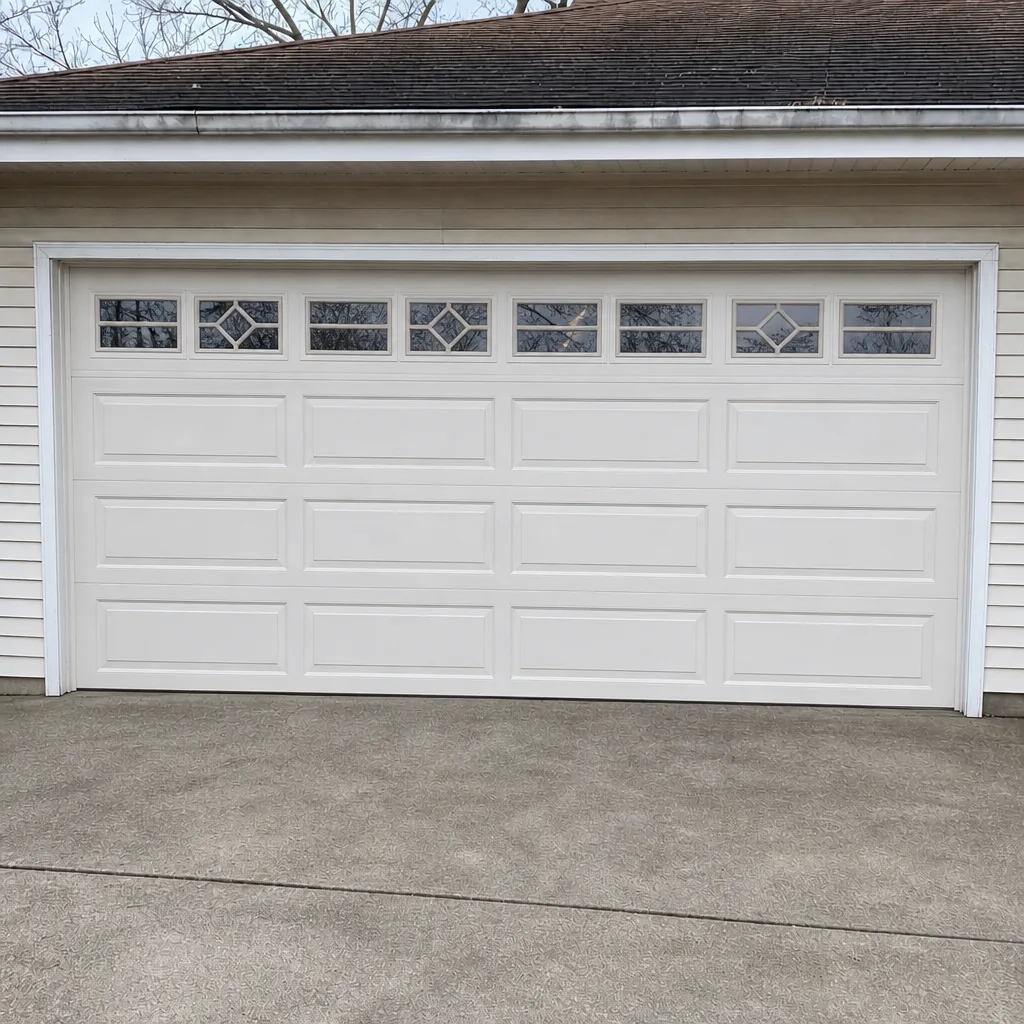
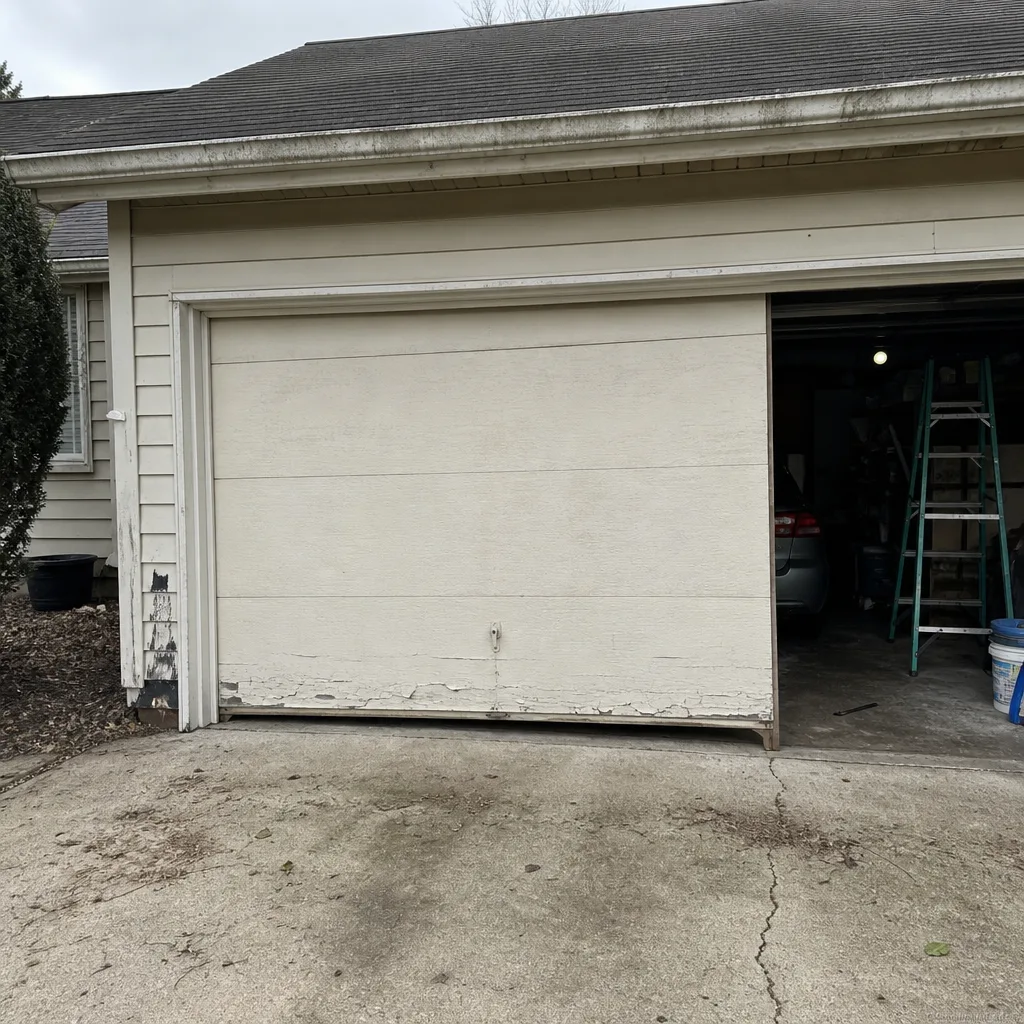
See the difference
 Before
 After
 Before
 After
 Before
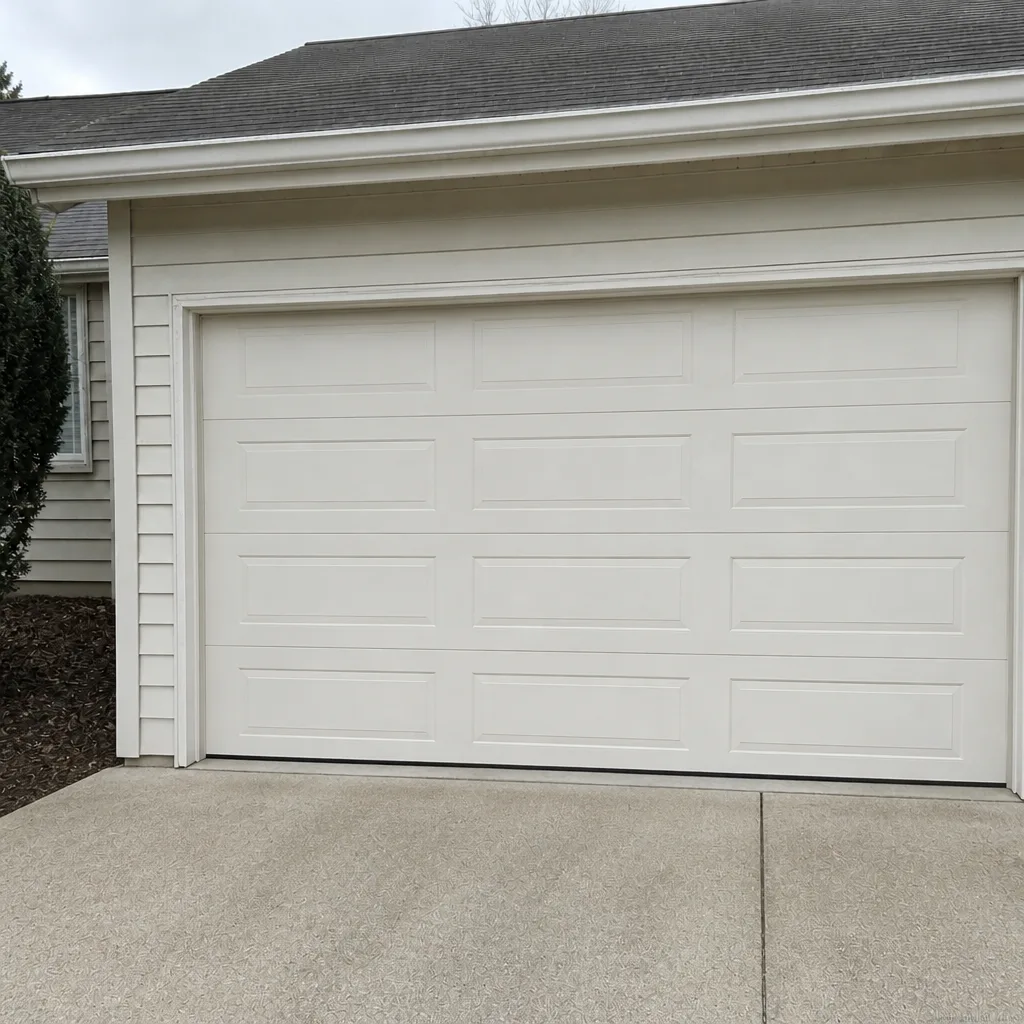 After
When to Call a Professional
Call a professional garage door company for any of these scenarios: a broken spring (do not touch it), a door that’s off track or hanging crooked, a snapped torsion cable, a door that won’t reverse on contact, an opener that runs but won’t move the door, and any time you’re unsure whether the door is safe to operate. Those are not situations where hand tools and a YouTube video land in a good place. Springs, cables, and the tension assembly will cause serious injury if you don’t know exactly what’s holding what.
If your door is stuck and you don’t know why, that’s also a call. Bramble Garage Door Repair offers free estimates in Rockford – call (855) 758-5321. We answer 24/7. Fast dispatch from 7am to 7pm, Sunday through Friday. Same-day repair is available for many Rockford calls, and the price is quoted and agreed before any work starts.
If you’d like to see what else we handle across the region, our Rockford page covers the full service picture.
Frequently Asked Questions
Most Rockford garage door emergency repairs – a broken spring, a worn roller, a snapped cable – are typically in the $180 to $340 range, and a matched pair of springs runs about twice the single-spring price because the pair is replaced together. Opener repairs are usually similar. Anything beyond that (track replacement, panel damage) is quoted separately. The written estimate sets the final price, and every estimate is free. Call (855) 758-5321 for an exact quote.
Yes for most Rockford calls. Spring repair is a same-day job when the right spring is available, which is why having your door brand and model number ready when you call makes a real difference. Call (855) 758-5321. We answer 24/7. Fast dispatch from 7am to 7pm, Sunday through Friday.
No – the written estimate is the price. We inspect the door, quote the job, and get your agreement before any work starts. If we find something else during the repair that changes the scope, we stop and requote rather than adding to the bill. Free estimates on every call.
Yes, our technicians are licensed and insured, and they work only on garage doors and openers – no split attention across plumbing or HVAC. They have up to 8 years of experience handling the eight most common residential brands, including LiftMaster, Chamberlain, Genie, and Clopay. Call (855) 758-5321 to book.
If the door has a working opener with battery backup, open it once to get the car out, then close it and leave it. If not, use the manual release – door fully closed first, stand clear, pull once. Never lift a door with a broken spring by hand; it can weigh far more than you expect and drop without warning. If you’re unsure whether the door is safe to lift, call (855) 758-5321 first.
No. A garage door with a broken torsion or extension spring should not be operated by hand or with the opener – the springs are what counterbalance the door’s weight, and without them the door is far heavier than it looks. Leave it closed, secure it from inside, and call for service. Do not attempt to lift the door to test it.
The Bottom Line
Garage door emergencies in Rockford follow patterns: cold snaps break weakened springs, storms cut power to older openers, and stuck doors get worse when homeowners force them. The three moves that matter most are knowing where your manual release cord is and how to use it without detaching the trolley, keeping the garage secure from the inside after a spring failure with a slide bolt and lock bar, and having your door brand and opener model ready when you call. Ten minutes of pre-winter checking catches most of these before they become emergencies. When they don’t, call (855) 758-5321 for a free estimate – the price is agreed before work starts, and we cover the brands you already own.
Written by the team at Bramble Garage Door Repair.