
Last updated November 16, 2026
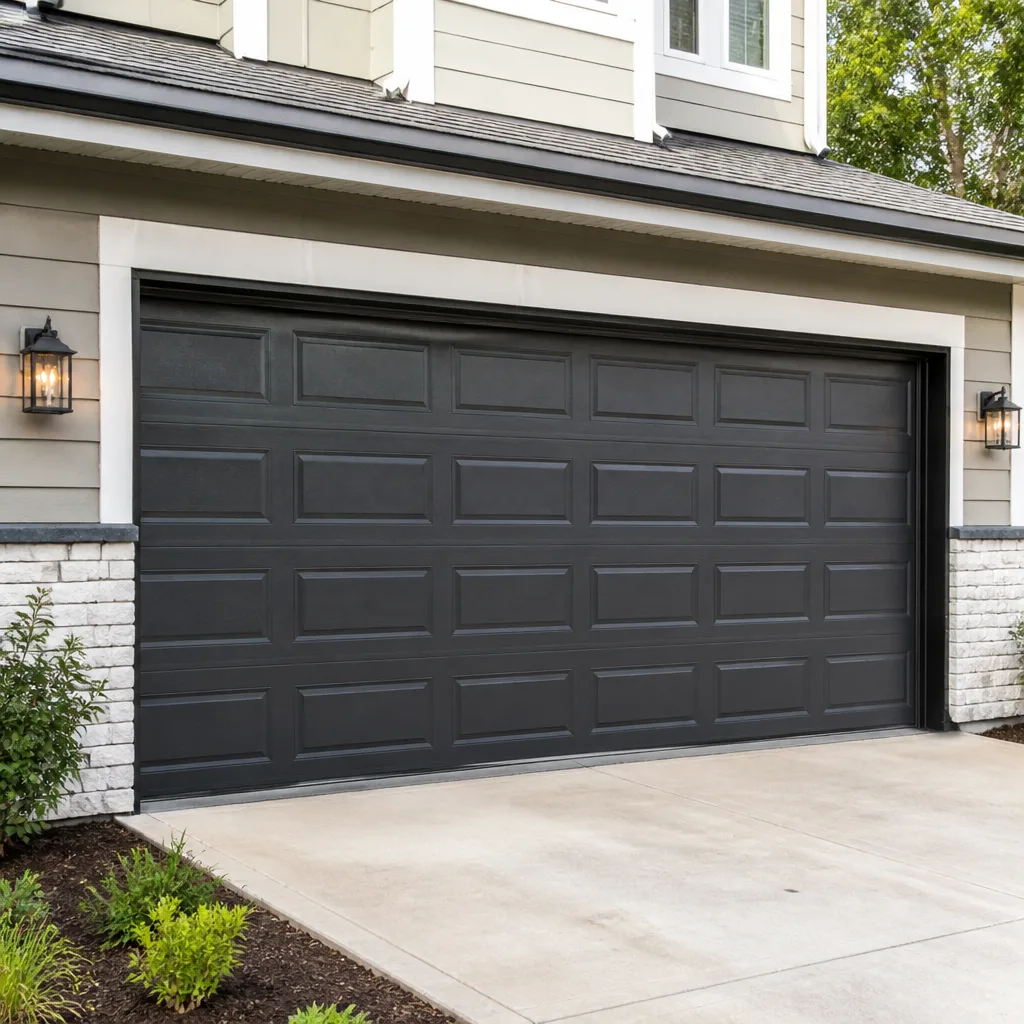 Raised-panel steel
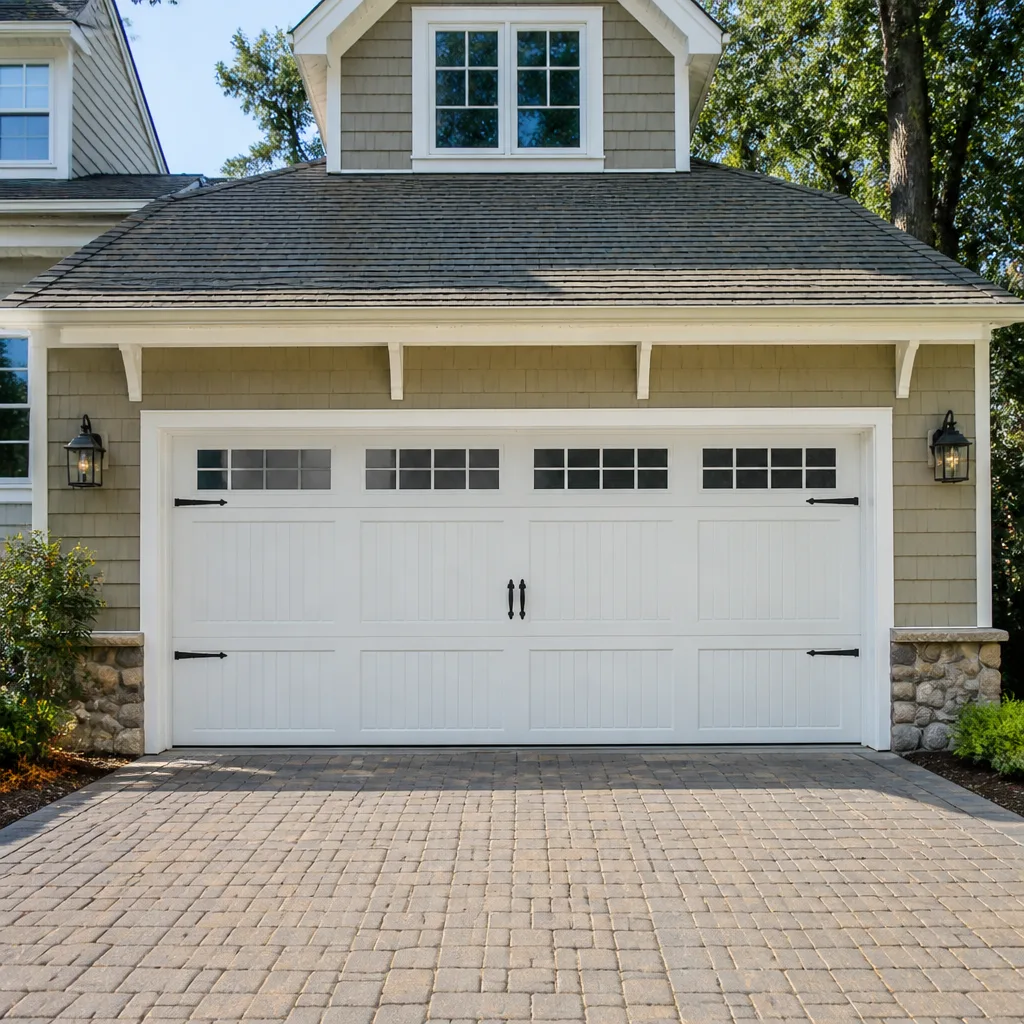 Carriage house
 Modern flush
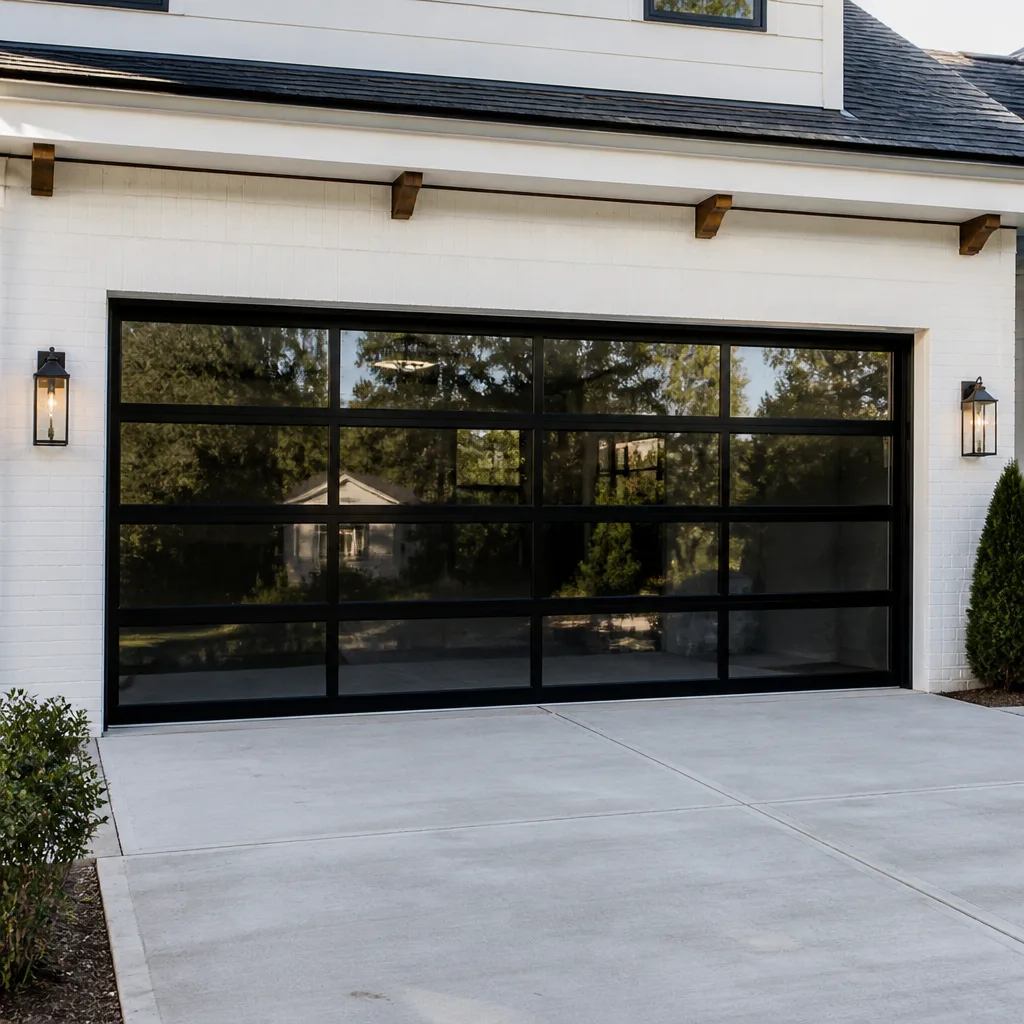 Full-view glass
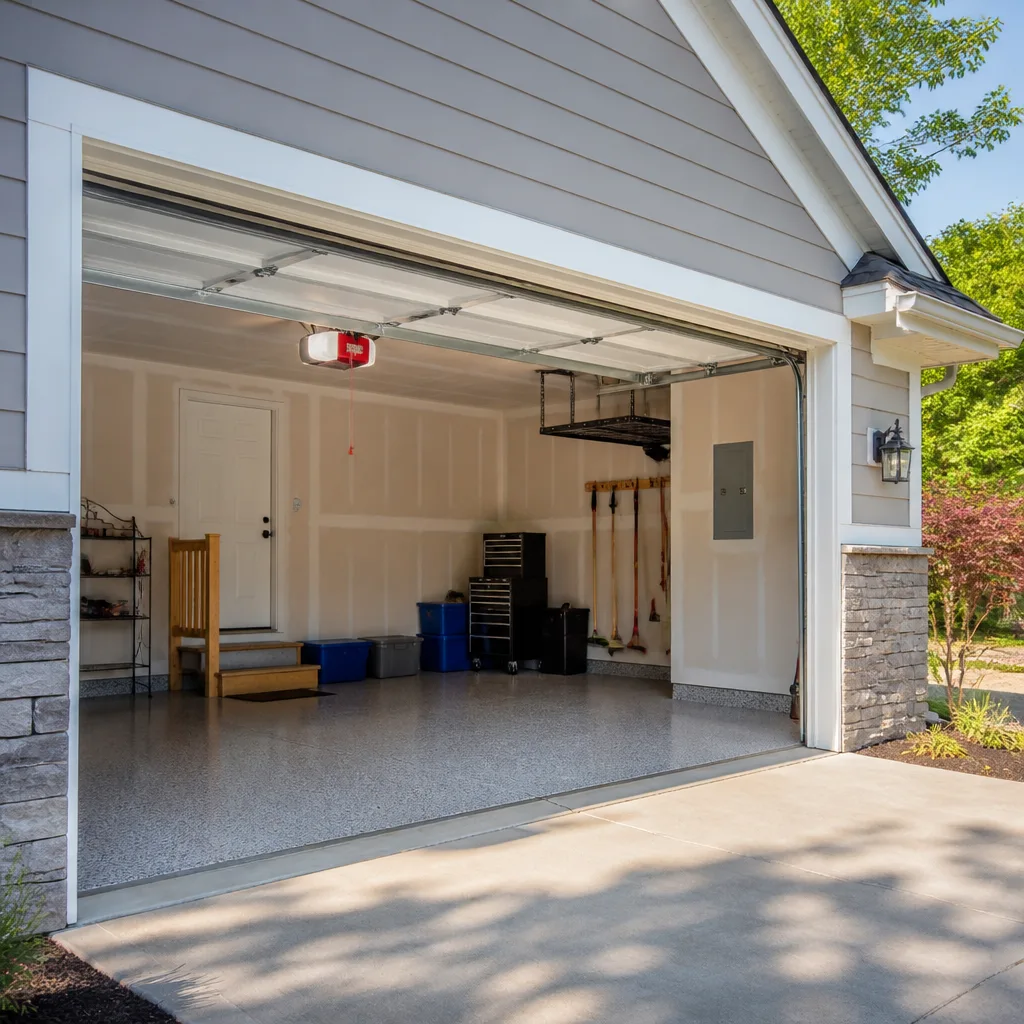 LiftMaster openers
 Chamberlain openers
Full 25-point door and opener safety check with every visit - springs, cables, rollers, tracks, and your LiftMaster or Chamberlain opener included
You get a price before we start. It does not change when the pro arrives.
Get your free estimateDIY vs Professional Garage Door: The Rockford Homeowner’s Decision Guide
Here’s the part most DIY-versus-pro articles get wrong: garage door work isn’t one kind of task you either tackle yourself or hand off wholesale. It’s a spectrum. Swapping a remote battery and aligning a safety sensor sit at the easy end. Replacing a torsion spring sits at the other end, and it’s not there because it demands more skill – it’s there because that spring holds 150 to 200 foot-pounds of stored tension, and releasing it wrong can break bones or worse. The smart question isn’t “should I DIY my garage door?” It’s “which specific jobs belong in my hands, and which ones will cost more if I try them myself?” This guide draws that line task by task, so you know exactly where your comfort ends and a trained technician’s day begins. We’ll use what we see around Rockford to keep it practical.
Quick Answer
Some garage door tasks are genuinely fine to do yourself: lubricating moving parts, replacing a bottom seal, adjusting safety sensors, and programming remotes or keypads. Anything involving torsion springs, cables, the door’s balance, or opener electrical work belongs with a trained technician, because those components store dangerous force or carry fire and injury risk. For anything beyond the basics, a professional garage door repair in Rockford usually costs less than correcting a botched DIY attempt, and the work is done once, safely.
Styles & brands we work with
- Raised-panel steel
- Carriage house
- Modern flush
- Full-view glass
- LiftMaster openers
- Chamberlain openers
Table of Contents
- The Definitive DIY vs. Pro Task List
- Why Torsion Springs Are Categorically Different
- The Real Cost: What You Save vs. What a Botched Attempt Costs
- How to Source the Right Parts for Legitimate DIY
- The Liability Question: Your Insurance in Illinois
- What Rockford Conditions Do to Your Door (and When to Call)
- Your Opener and Door Work as One System
- A Simple Framework for Deciding
The Definitive DIY vs. Pro Task List
Strip away the marketing and most garage door advice boils down to this: some jobs are safe and sensible for a careful homeowner, and some simply aren’t. Here’s the honest split. If a task appears in the pro column, it’s not because we want the work – it’s because the component stores energy or involves wiring that can hurt you.
Safe to Do Yourself
- Lubricating hinges, rollers, and tracks. A light application of garage door lubricant keeps things quiet and smooth. This is the single best thing you can do for the door’s life.
- Replacing the bottom weather seal. Once the door is fully down and unplugged for safety, the bottom rubber seal slides out and a new one slides in.
- Aligning and cleaning safety sensors. If the door won’t close, a dirty or knocked-out-of-line sensor is often the culprit. Wipe the lenses and check that the two sensors face each other.
- Programming remotes and keypads. Following the opener’s manual, most LiftMaster, Chamberlain, Genie, and Craftsman units let you add or change remotes in a few minutes.
- Replacing the opener’s light bulbs and battery backup, where the manual guides it. Read the manual first; opener brands differ.
Requires a Trained Technician
- Torsion spring repair or replacement. The stored energy here is the reason this is the number-one danger job in the trade.
- Extension spring or cable repair. Cables and springs work as one tensioned system; releasing either under load is dangerous.
- Door balance and track alignment work. Once a door is off-balance, adjusting it safely requires the right technique.
- Opener electrical and logic board repair. This touches 120-volt household wiring, which is never a DIY component.
- Panel replacement and full door installation. Panels are heavy, and a misaligned install strains the whole system.
If you’re not sure which column a job belongs in, that’s exactly what a quick conversation is for. We work on the brand you already have, so a phone call can usually tell you whether it’s a DIY task or a technician’s visit.
Why Torsion Springs Are Categorically Different
People lump torsion spring repair in with “hard DIY jobs” as if it’s just a matter of more time and elbow grease. That framing is wrong, and it’s worth understanding why in everyday terms. A torsion spring holds the entire weight of your garage door in a coiled store of energy – typically in the range of 150 to 200 foot-pounds. That energy is what makes a 150-pound door feel light enough to lift with one hand. It’s also what makes the spring so unforgiving.
When the spring is wound, the steel bar is under load. To replace it you have to control that load with winding bars, in a specific sequence, keeping even tension on both sides. Get the sequence wrong, let a bar slip, or misjudge how many turns are left, and the spring can release all at once. The winding bars can fly out, and the spring itself can snap with enough force to injure anyone nearby. This isn’t about being clumsy or unskilled – it’s the physics of a component engineered to store force.
That’s the honest engineering explanation, not a scare tactic. Contrast it with lubricating a hinge: if you do that wrong, the worst outcome is a squeak. Contrast it with the spring: if you do that wrong, the worst outcome is a trip to the emergency room and a door left hanging.
There’s a second reason spring work belongs with a technician. Getting the correct spring is not as simple as matching a length. Springs are rated by wire gauge, inner diameter, and length, and the combination has to match your door’s exact weight and height. Order the wrong one and the door either won’t balance or the spring will fail early. A trained technician measures the door, calculates the right spring, and installs it as part of a system. If you’re anywhere in Rockford and hear that sharp bang of a spring letting go, that’s the moment to call a pro rather than reach for tools.
The Real Cost: What You Save vs. What a Botched Attempt Costs
The DIY argument usually starts and ends with the sticker price of a part. That number is real, but it’s only half the story. The other half is what correcting a failed attempt costs – in time, in replacement parts, and sometimes in a door that needs replacing instead of repairing. Here’s how we’d frame the comparison honestly, without pretending to quote exact numbers we haven’t seen.
Where DIY Genuinely Saves Money
- Lubrication and seal replacement. A tube of lubricant and a bottom seal are inexpensive, and the work takes minutes. This is real savings with almost no downside.
- Sensor cleaning and remote programming. Free to do once you know how; the manual is your guide.
Where DIY Often Costs More Than It Saves
- Opener installation. The opener itself is a fraction of the job. Mounting it, wiring it safely, setting the travel limits, and pairing the door’s balance to the opener’s force can go wrong in ways that damage the new unit. A homeowner who buys the wrong opener for their door’s weight and height, or mis-sets the limits, ends up paying for a second unit or a technician visit.
- Spring or cable repair. A failed DIY attempt usually means the door is now stuck, sometimes damaged, and a technician has to undo the mess before starting the real repair. That’s the savings gone and then some.
- Panel or door replacement. Mis-measuring a panel means the new one doesn’t fit, and now you own a part you can’t use.
The honest takeaway: the easy tasks are worth doing yourself, and the hard tasks aren’t worth the risk of a second bill. Where a repair is the smarter call than a replacement, that’s the conversation we’d rather have with you than see you spend twice. For a clear picture of what work actually runs in the Rockford market, our garage door repair page lays out typical ranges and what drives them. Every price we give is quoted and agreed before any work starts, so there are no surprises on the invoice.
How to Source the Right Parts for Legitimate DIY
If you’re doing the tasks that are safe to DIY, buying the wrong grade or an incompatible part is the main way to turn a simple job into a frustrating one. Garage door hardware isn’t like buying a light bulb; the fit matters, and cheap parts fail early. Here’s how to get it right.
- Match the brand and model, not just the category. A remote for a LiftMaster opener is not interchangeable with a Genie or Craftsman remote unless the manual says so. Check the opener’s model number before you buy.
- Buy seals and rollers by size, not by guess. Bottom seals come in specific widths and profiles. Measure the door’s bottom edge and the track’s inner dimension before ordering.
- Avoid no-name hardware for anything under tension. For rollers and hinges, stick with parts rated for residential garage doors; the cheapest option often wears out in a season.
- Keep the manual. The opener manual tells you the correct remote frequencies, limits, and battery backup specs. It’s the most reliable source you have.
- Buy the grade the job calls for. For a Clopay, Amarr, Wayne Dalton, or another common door, the seal and hardware profiles are standardized enough that the right part is easy to find once you know the model.
If you’re unsure whether a part is compatible, ask before you order. We work on the brand you already have, so a question about a Wayne Dalton seal or a LiftMaster remote is one we can answer straight. If you’d rather skip the guesswork entirely, our garage door opener repair team can handle the opener side while you keep the door’s simple maintenance in your own hands.
The Liability Question: Your Insurance in Illinois
Here’s the question almost no DIY guide addresses: what happens to your homeowner’s insurance if a DIY garage door repair causes damage or injury? The honest answer is that it depends on your policy and the circumstances, and no article can tell you what your specific coverage says. But there are general principles worth knowing before you pick up a winding bar.
- Property damage is usually the easier case. If a DIY repair damages the door, the opener, or the structure around it, your homeowner’s policy may or may not cover it, depending on the cause and your deductible. A repair that fails because of poor workmanship is often treated differently from an accidental event. Read your policy or call your agent – it’s a ten-minute conversation that can save a very expensive surprise.
- Injury to someone else is where it gets serious. If a door you repaired falls on a family member, a visitor, or a delivery person, liability questions get complicated fast. Your policy may respond, but a claim like that can affect your coverage going forward. This is the strongest argument for professional work on anything tensioned.
- Resale and disclosure matter. If you sell a Rockford home, unpermitted or amateur structural work can become a disclosure issue. A professional repair record is cleaner.
- Your deductible is often the real number. Even if a claim is covered, the deductible plus the premium impact can exceed what a professional repair would have cost in the first place.
We’re not your insurance agent, and we’d never pretend to be. But we can tell you this plainly: for the tasks that involve stored tension or electrical work, the downside of DIY is insurance-shaped, and the upside is small. That math usually points one direction.
What Rockford Conditions Do to Your Door (and When to Call)
A garage door in Rockford lives a harder life than one in a mild climate. The swings between humid summers and hard, cold winters work on wood, steel, and seals differently than a steady, gentle climate would. That has a real effect on which tasks are worth doing yourself and which ones you should hand to a technician.
- Cold winters stiffen everything. Lubricant thickens in the cold, and a door that ran smoothly in October can groan and strain in January. Winter is the season when lubrication matters most, and it’s also the season when a failing spring is most likely to let go. That’s a strong case for booking a professional repair rather than waiting.
- Freeze-thaw cycles move the ground. The slab and frame around your door can shift slightly with the seasons, which throws the door off balance. An unbalanced door is a technician’s job, not a DIY one.
- Summer heat and humidity warp seals and wood. Bottom seals crack; wood components swell. Seal replacement is a safe DIY task. Warped panels and balance problems are not.
- Snow, ice, and road grit. The tracks collect grit through the winter, which wears rollers faster. Cleaning and lubricating the tracks is worth doing yourself before the season turns.
We know the neighborhoods where older doors and hardware are common, and the ones where newer builds have different opener systems. That local familiarity is part of why a Rockford homeowner can get a straight answer fast. If you’re in a neighborhood like Edgewater or anywhere else around the city, our Rockford page covers the areas we serve. The Rockford climate is reason enough to have a professional check the door’s balance and spring health once a year, whether or not anything seems wrong yet.
Your Opener and Door Work as One System
A garage door and its opener are two halves of one machine, and treating them separately is where a lot of DIY projects turn sideways. The opener’s force settings are matched to the door’s weight and balance. Change one and the other has to keep up. This is why many single-focus shops split the job into two service calls, and why an integrated diagnosis matters when you call in a pro.
Consider what happens when you replace an opener as a DIY project. The new opener needs its travel limits set so it stops at the right point on the floor, its force sensitivity matched so it reverses when it meets an obstruction, and its safety sensors aligned so a child or pet can’t be caught. Get any of those wrong – or install an opener that’s too weak or too strong for your door – and you’ve got a safety problem disguised as a working door. The door may go up and down fine in front of you and still fail the safety test the day it has to reverse.
That’s why we diagnose the door and the opener together. If the door is off-balance, no opener will fix it. If the opener’s logic board is failing, replacing the door won’t help. Whether the brand is LiftMaster, Chamberlain, Genie, Craftsman, or another of the ones we work on, the answer is the same: find the actual cause before spending money on a part. Our opener repair work and our door repair work sit under one roof, so you’re not handed off to a subcontractor when the two systems interact.
A Simple Framework for Deciding
If you want a quick way to sort any garage door job, here it is. Ask three questions in order, and stop at the first one that applies.
- Does the job involve stored tension or household electrical wiring? If yes, it’s a professional job. That covers torsion springs, cables, and opener electrical work. No exceptions.
- Does the job require the door to be balanced, measured, or structural? If yes, it’s a professional job. That covers track alignment, panel replacement, and full door installation.
- Is the job maintenance – cleaning, lubricating, sealing, or programming? If yes, and you have the right parts, it’s a safe DIY task.
That’s the framework in a nutshell. Most of the frustration we hear about comes from homeowners skipping to question three when they should have stopped at question one. If you’re not sure where a job falls, call and ask. A fast diagnosis is free, and it’s better to know before you buy a part you can’t return.
Common Mistakes to Avoid
- Underestimating the torsion spring. The most serious mistake is treating a spring like any other worn part. It holds stored energy that can injure you if it releases wrong, which is why it belongs with a trained professional.
- Buying a remote or opener for the wrong brand. Picking a remote that doesn’t match your LiftMaster, Genie, or Craftsman opener wastes money and causes a pairing headache. Check the model number first.
- Using WD-40 or grease on tracks and springs. These attract grit and gum up in the cold. Garage door lubricant is the right product, and it matters more in a Rockford winter.
- Ignoring a door that’s off-balance. A door that drifts or feels heavy is telling you something. Adjusting it safely is a technician’s job; leaving it alone strains the opener and spring.
- Setting opener force limits by trial and error. The force setting controls whether the door reverses on an obstruction. Guessing at it creates a safety hazard, not a shortcut.
- Forgetting to check insurance before a big DIY attempt. If you’re taking on a larger job, call your agent first. The deductible alone can exceed the cost of professional work in Illinois.
- Mismatching a bottom seal. The wrong width or profile lets cold air, water, and pests in all winter. Measure before you order.
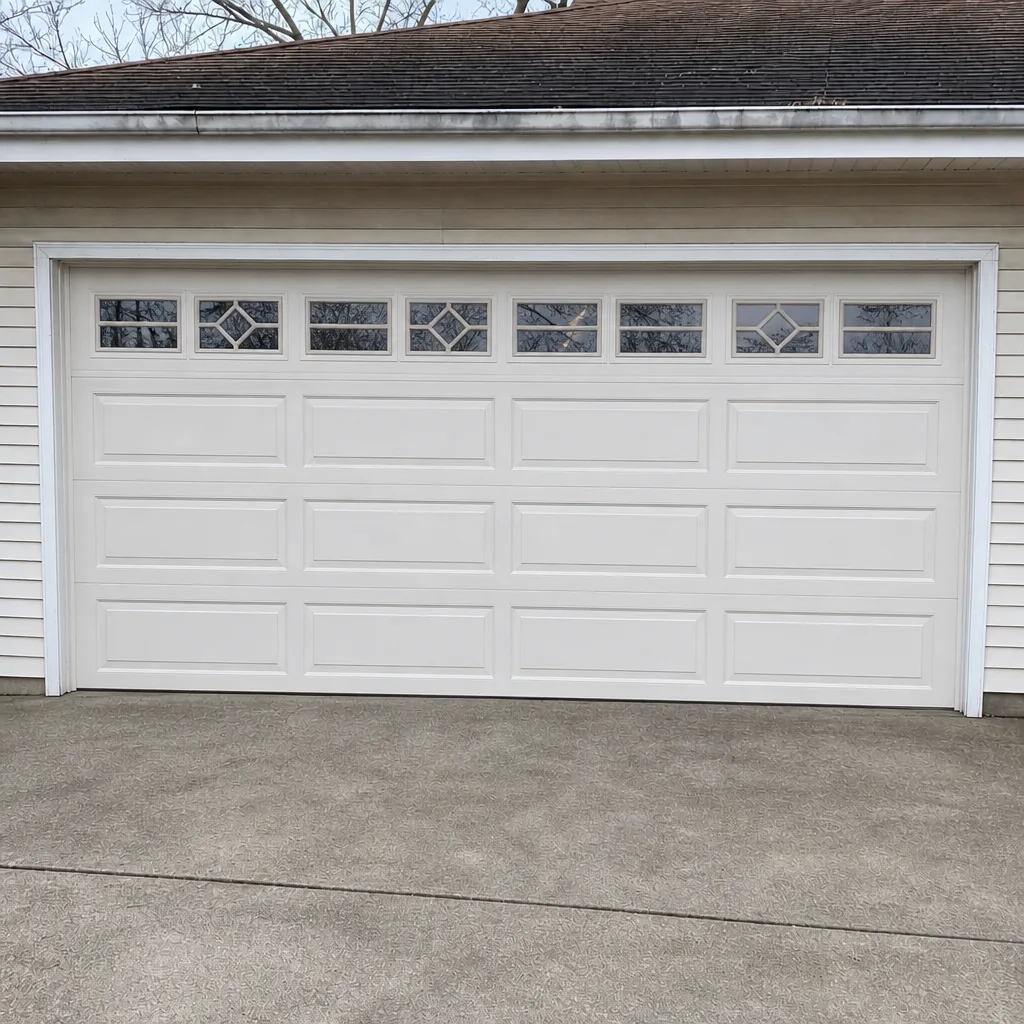
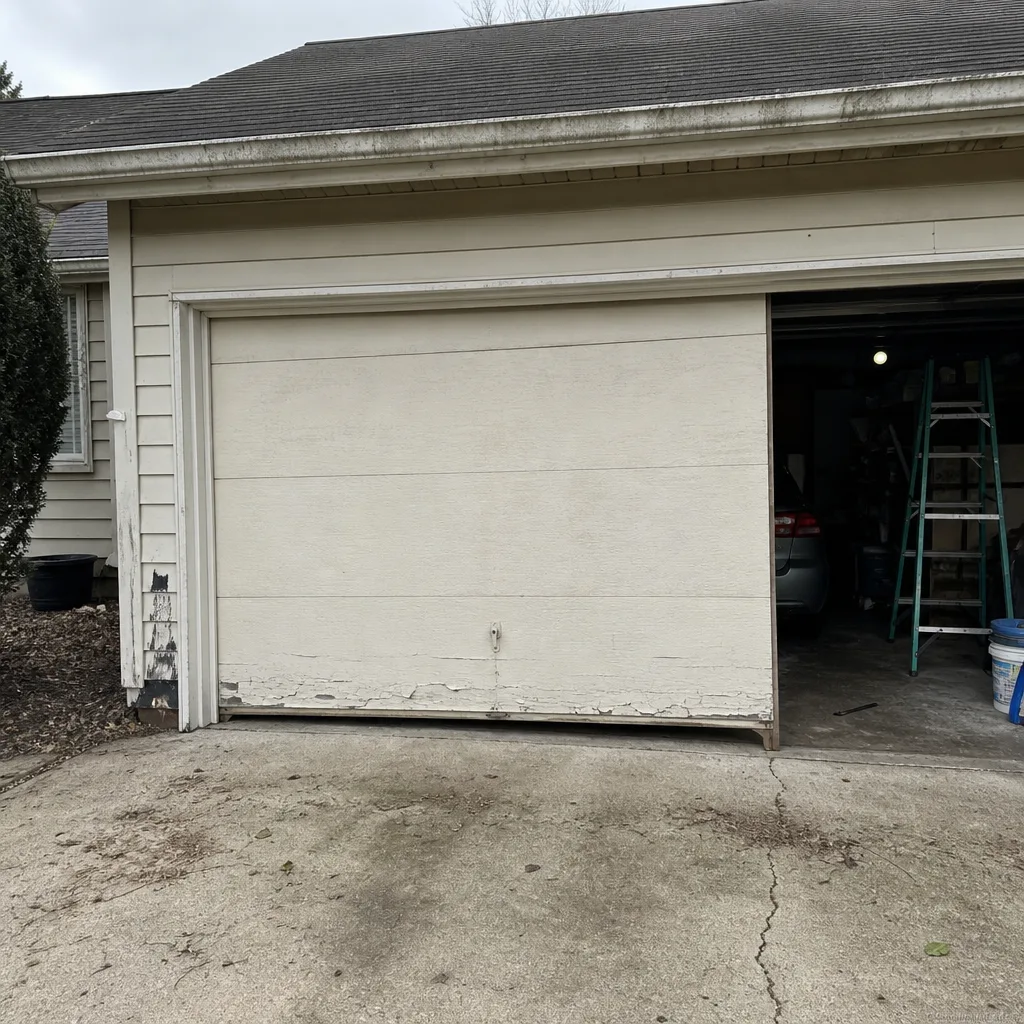
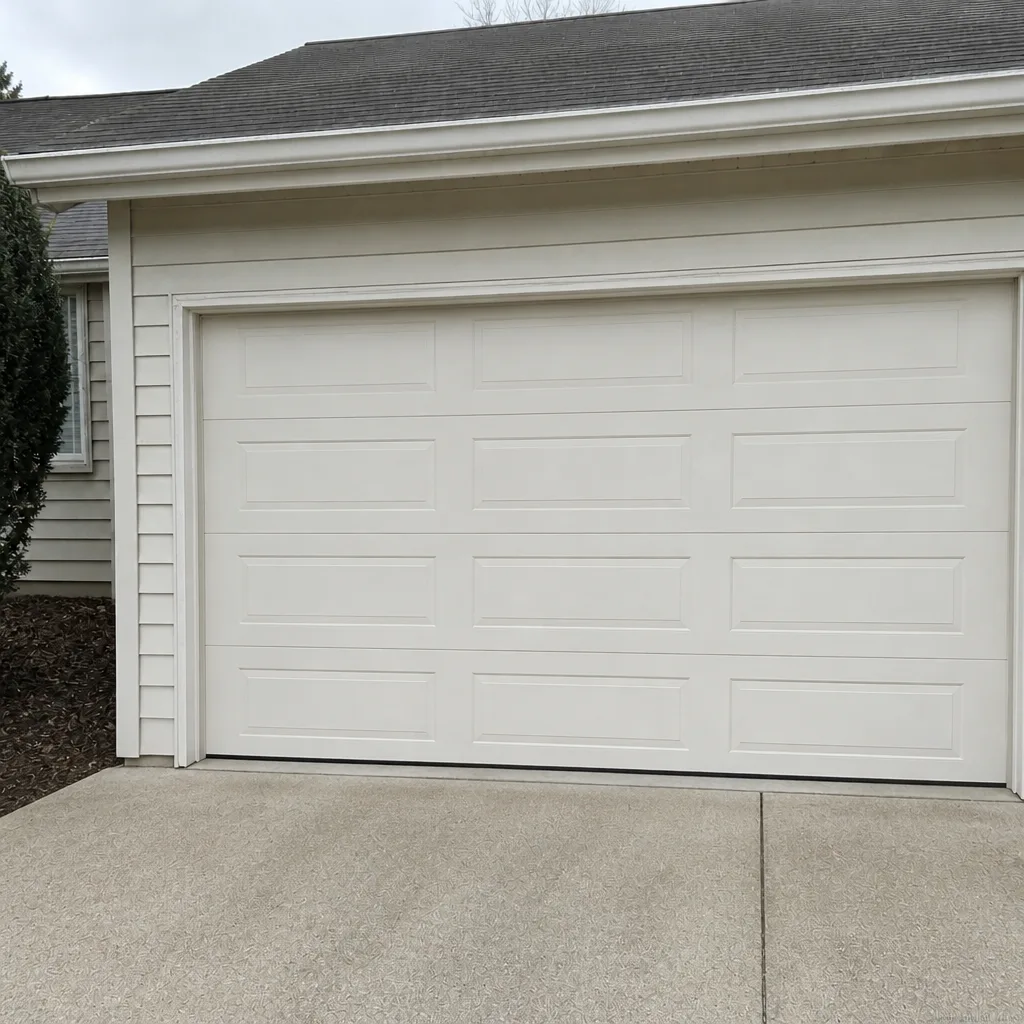
See the difference
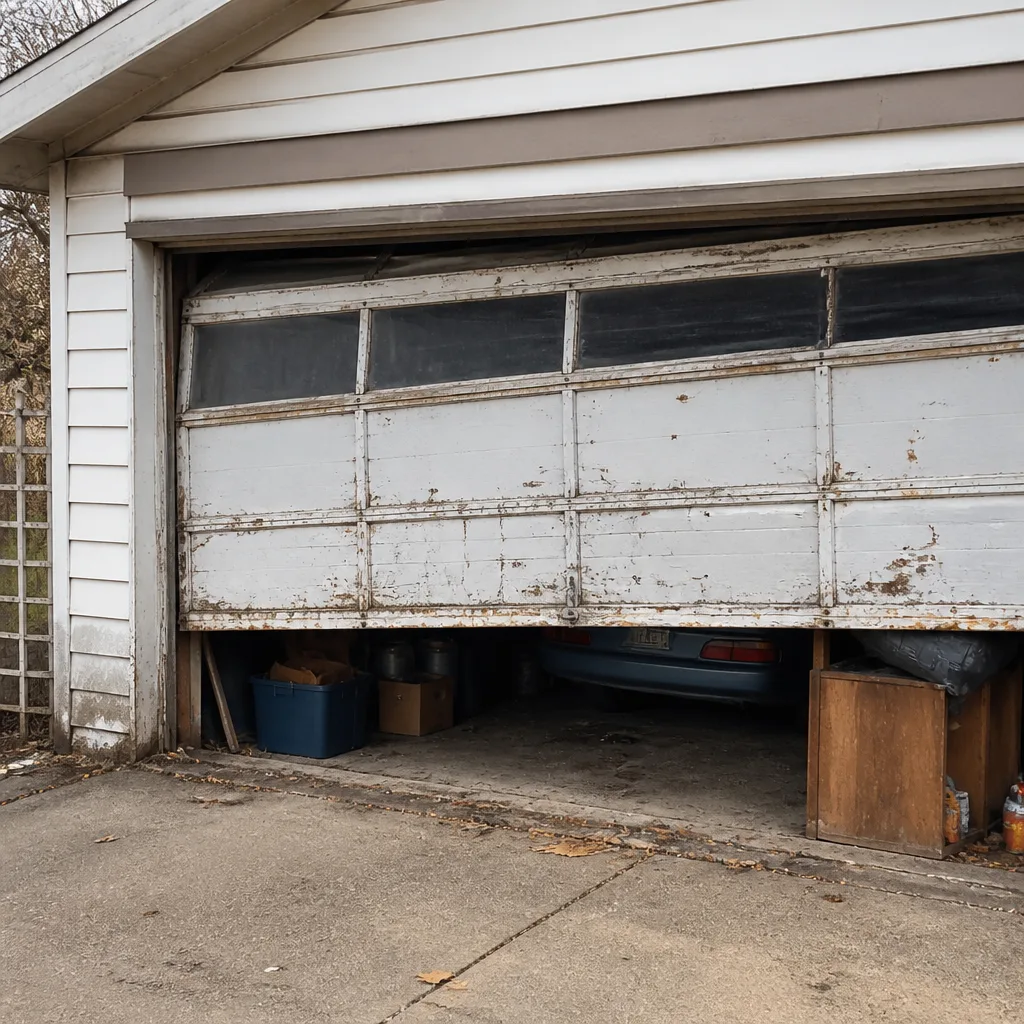 Before
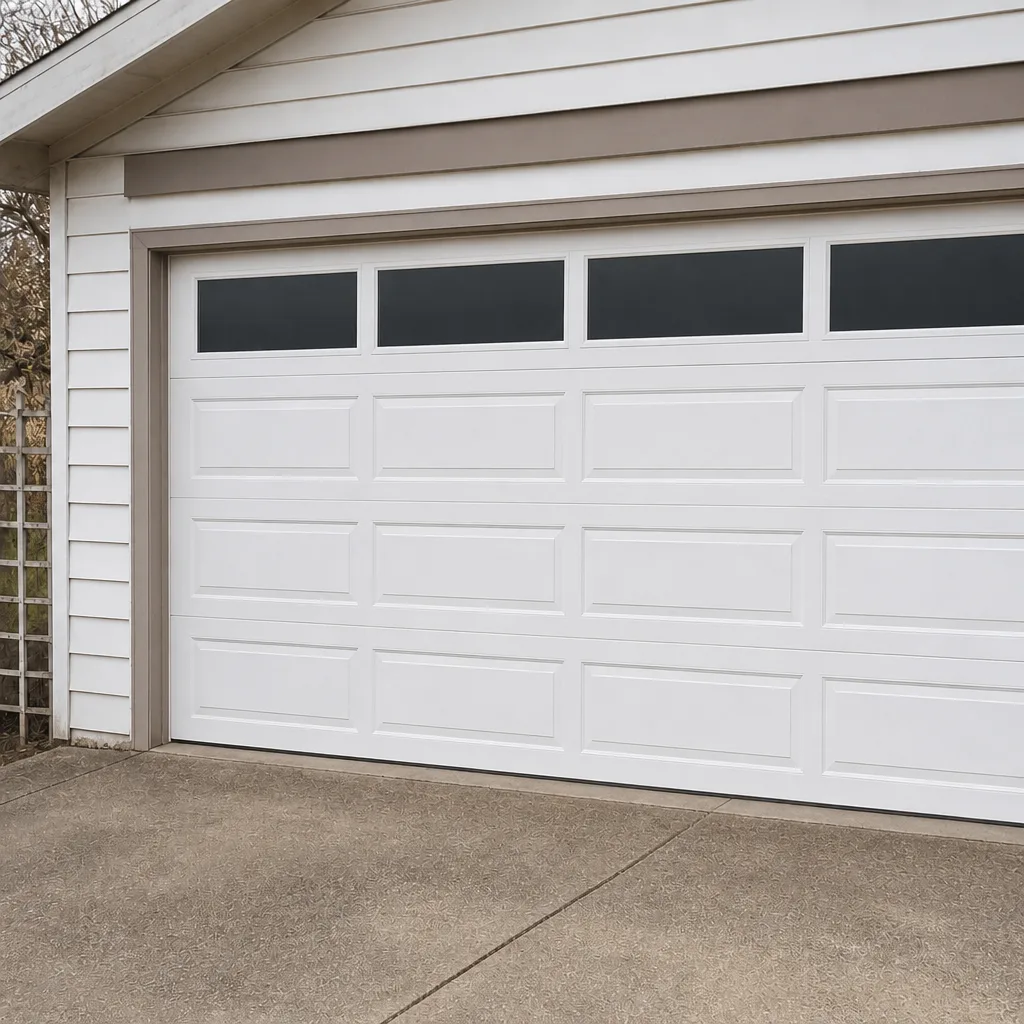 After
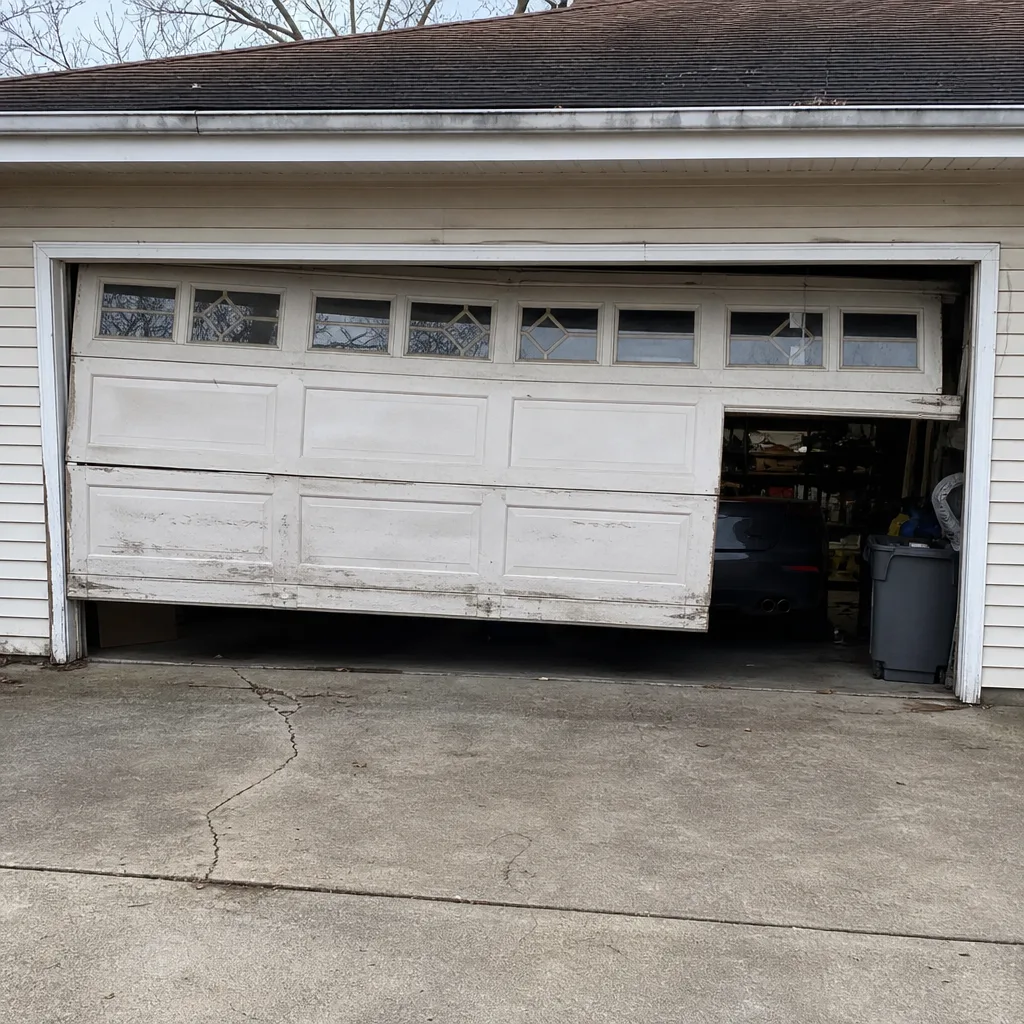 Before
 After
 Before
 After
When to Call a Professional
Call a technician when any of these come up: a spring has snapped or looks stretched, a cable is frayed or slack, the door won’t stay balanced or drifts, the opener runs but the door doesn’t move, the door reverses for no reason, or you’re installing a new opener or replacing a panel. Those are all cases where DIY is the more expensive path. Bramble Garage Door Repair offers free estimates in Rockford – call (855) 758-5321. We answer 24/7, and fast dispatch runs from 7am to 7pm, Sunday through Friday. We’re a garage door specialist, not a general handyman, so the technician who diagnoses your Clopay door also knows its opener. We work on the brand you already have, and we’ll tell you honestly whether repair or replacement is the smarter call.
Frequently Asked Questions
No, a torsion spring should not be replaced by a homeowner. The spring stores 150 to 200 foot-pounds of energy, and releasing it wrong can cause serious injury, so this is a job for a trained technician. Call (855) 758-5321 for a free estimate; we answer 24/7.
Lubrication, bottom seal replacement, safety sensor adjustment, and remote or keypad programming are safe to do yourself. Anything involving springs, cables, door balance, or opener electrical work belongs with a professional. If you’re unsure, a quick call settles it before you spend money on parts.
Hiring a pro is usually cheaper once you count the full job. The part is only part of it – correct mounting, safe wiring, travel limits, and force settings all have to be right, and a botched install often costs more to fix than the original professional job would have. We give a written estimate before any work starts, so you know the number up front.
It depends on your policy and the cause, so check with your insurer before taking on anything tensioned. Generally, a failed DIY repair can complicate a claim, and the deductible alone can exceed what a professional repair would cost. For spring and cable work, the safer call is professional.
Pull the emergency release with the door fully down, then lift it by hand to about waist height. A balanced door stays put; a door that drops or shoots up is off-balance. Freeze-thaw movement around the frame can throw a door off balance, so have a technician check it rather than adjusting it yourself.
Yes. Your door and opener work as one system, so we diagnose both together rather than splitting them into separate service calls. We work on LiftMaster, Chamberlain, Genie, Clopay, Amarr, Wayne Dalton, Craftsman, and Raynor. Call (855) 758-5321 – estimates are free.
The Bottom Line
The DIY-versus-pro question for garage doors comes down to a simple split: maintenance is yours, tension and electrical work is a technician’s. Lubricant, seals, sensors, and remotes are worth doing yourself and save real money. Torsion springs, cables, balance, and opener electrical work carry risk that makes DIY cost more, not less – sometimes in dollars, sometimes in safety. In a Rockford climate that swings from humid summers to hard winters, having the door’s balance and spring health checked once a year is worth more than any single repair. If you’re in doubt about a job, ask before you buy a part. We work on the brand you already have, and we’ll tell you straight whether repair is the smarter call.
Call (855) 758-5321 for a free estimate. We answer 24/7, with fast dispatch from 7am to 7pm, Sunday through Friday. A written estimate sets the price before any work starts, so you’ll know the number going in. Whether it’s a Clopay panel, a Wayne Dalton seal, or a LiftMaster opener that’s acting up, Bramble Garage Door Repair handles the door and the opener as one system – and tells you honestly whether it’s a job for you or a job for us.
Written by the team at Bramble Garage Door Repair.